
Humainary is a software research and development lab creating the frontier computational foundations for situational intelligence in systems of services.
Systems that interpret themselves
We develop theories, architectures, and working software that enable complex distributed systems to transform operational evidence into signs, statuses, situations, and projections as they operate. This gives human and autonomous actors a shared basis for understanding what is happening, anticipating what may follow, and acting through explicit, bounded possibilities while intervention remains possible.
Substrates and Serventis are revolutionizing the way we interpret data. By integrating interpretation into the core of any distributed system, we’re transforming operational meaning into a first-class computational capability.
Our ground breaking research, which draws from semiotics, cybernetics, holonic flow, and perceptual control theory, is changing the game for how complex, large-scale software systems see, sense, situate, steer, simulate, and scale.
LATEST POSTS
- The Horizon Holder: Origin, Theory, and Succession
 Innovation arises from a specific blend of experience, sensitivity, and judgment; its evolution depends on the ongoing link between that blend and the resulting work. Naur’s theory building applies to the theory’s origin: the architect maintains it through a tacit, shifting horizon that shapes boundaries, possibilities, and commitments. Architect and architecture coevolve via observation, projection, and action; value often lies in averted outcomes latent until needed. When the originator leaves, the organization keeps the artifact and its decisions, but coherence falters when new extensions require fresh reasoning. Sustaining innovation demands a succession of imagination: cultivating people who inherit the horizon and revise the concept.
 - Beyond the Error Budget
 Google designed the “error budget” to solve a specific problem: ending the eternal war between developers (who want to ship fast) and operations (who want stability). For that, it works well. However, the tech industry has since misused the error budget, turning it into a stand-in for understanding system reliability. But an error budget is just a backward-looking ledger. It acts as an emergency brake that only pulls after the crash. To build truly resilient systems, organizations must graduate from simple accounting to Situational Intelligence—the ability to understand context, anticipate risks, and adapt in real time.
 - Agentic Coding: Death by a Thousand Plans
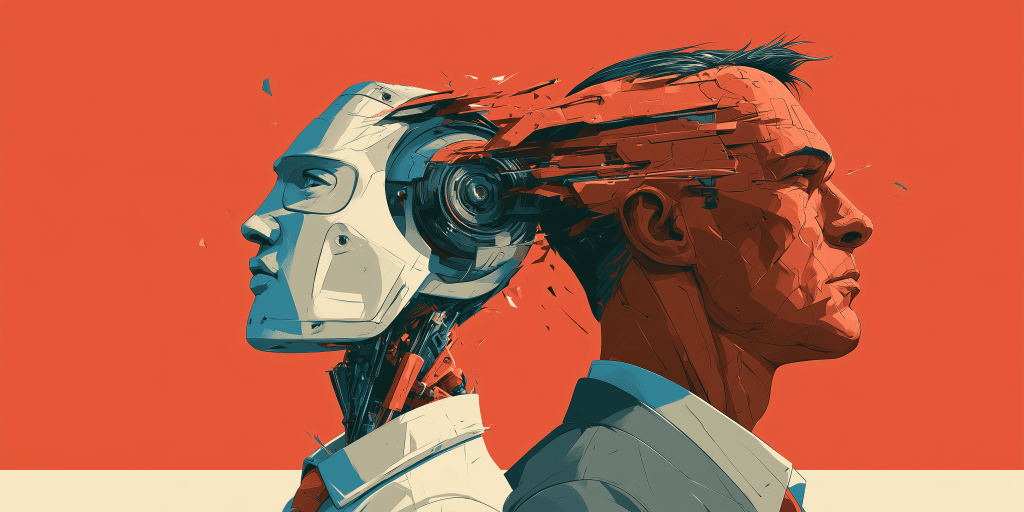 Multi-agent coding systems can satisfy every local contract while the program, the evolving conception that makes separate changes belong to one system, erodes. The loss begins upstream, in plans whose divisions acquire authority while the conception that justified them becomes optional. Software factories automate doing and knowing; the program lives in the thinking between them. Coherence holds when the people responsible for the system steer, and the production process gives their conception authority over the plan.
 - Observability is a Rung
 Observability is not an all-encompassing catch-all for system operations, but a single, distinct middle rung in a strict capability hierarchy that depends on lower-level diagnostic inputs and exists to enable higher-level situational awareness, decision-making, and control.
Timeline

Substrates / Serventis 3.0.0
The 3.0.0 releases of Substrates and Serventis are now available on GitHub.

Substrates / Serventis 3.0.0
The first snapshot releases of both Substrates and Serventis 3.0.0 have been published. The theme of this new major work stream is to deliver on the promise of Serventis in offering out-of-box scorecards, sequence pattern mining, and intelligent situational translation from from signs, signals, status through to situations.

Substrates 2.10 Released
Substrates 2.10 adds richer capture provenance with Capture.current() and Capture.state(), and introduces Sink plus Circuit.sink(…) overloads as a conduit-like Pool that wraps emissions into Captures and forwards them to a fixed endpoint. It also updates Pool, Capture, and Subscriber docs to describe sink wiring, subject/current behavior, lifecycle, and flow-control expectations. Separately, it adds Fiber.heartbeat(Duration) for duplicate-suppression with periodic stable-value heartbeats and Flow.relate(initial, func) for projecting consecutive-value relationships.
The End of the Line
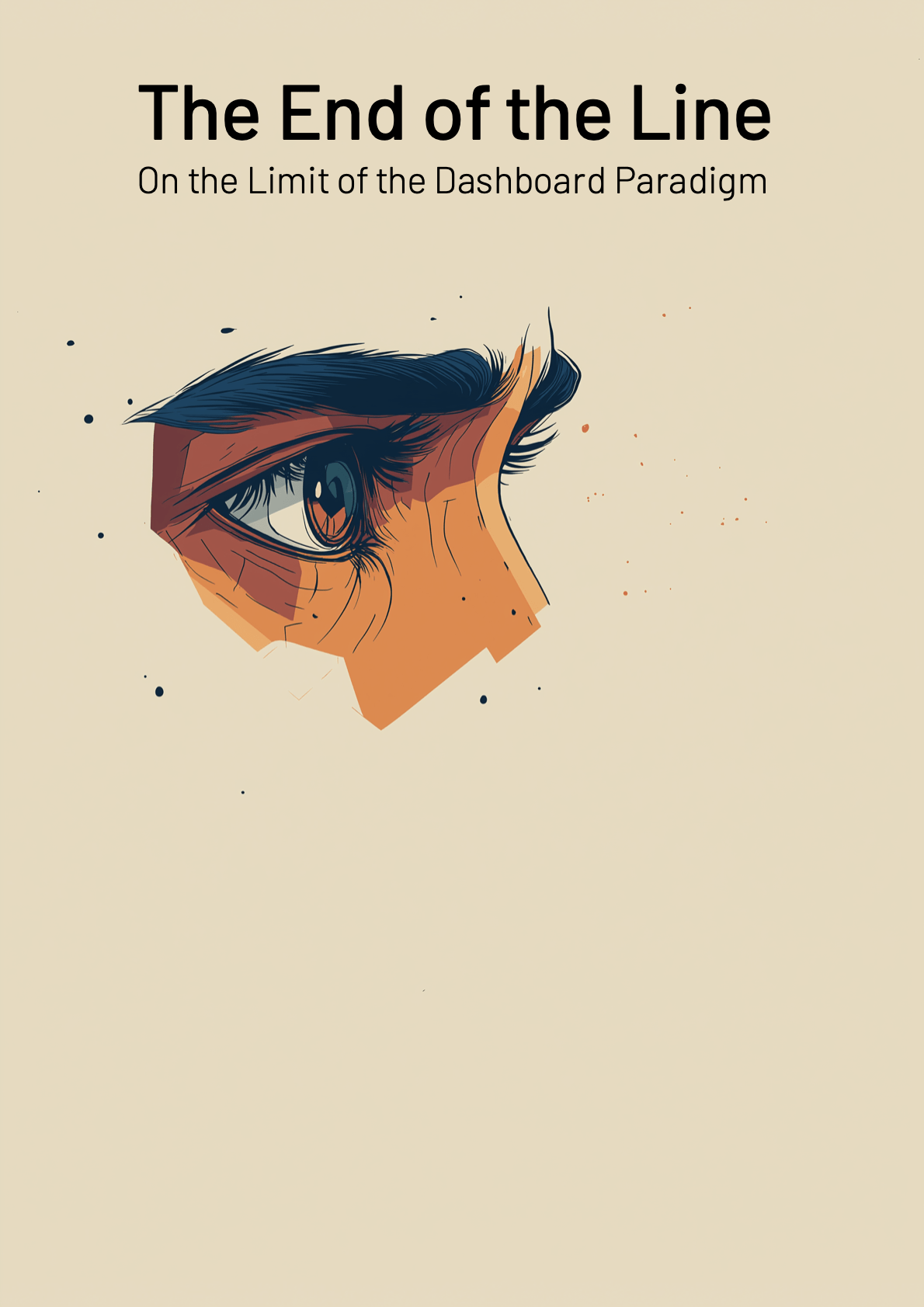
The dashboard ends at the eye. Each panel line holds a measurement and time. An operator interprets these readings, holding the model in memory. This places the interpretant outside the system. The cost is an interpretation tax on events like attention, fatigue, training, and institutional judgment drift. This tax compounds as walls grow while the eye limits human attention. This booklet locates that limit and proposes its resolution.

Substrates 2.9 Released
Substrates 2.9 introduces capability-narrowed state holders (Port, Pin), a bounded Reservoir with drain-ingress ordering that eliminates the need for await() before drain(). The release also brings the Substrates Specification into full alignment with the Java API, and lays groundwork for 3.0’s sequence-matching primitives.

Substrates 2.8 Released
Substrates 2.8 introduces Ticker, a circuit-owned scheduled emitter, with Circuit.ticker(…) operators that drive ordered, monotonic tick sequences through ordinary pipes. It also adds the state-as-output Flow.scan(initial, step) operator, making running state publication concise while preserving per-attachment isolation and deterministic circuit execution.

Substrates 2.7 Released
Substrates 2.7 adds Cell, a circuit-owned state cell with safe publication, obtained via Circuit.cell() / Circuit.cell(initial) and updated only through the pipe returned by Cell.pipe(), with new bridge overloads. It also adds time-based operators to Flow for a time and capacity-bounded rolling window.
The Signal
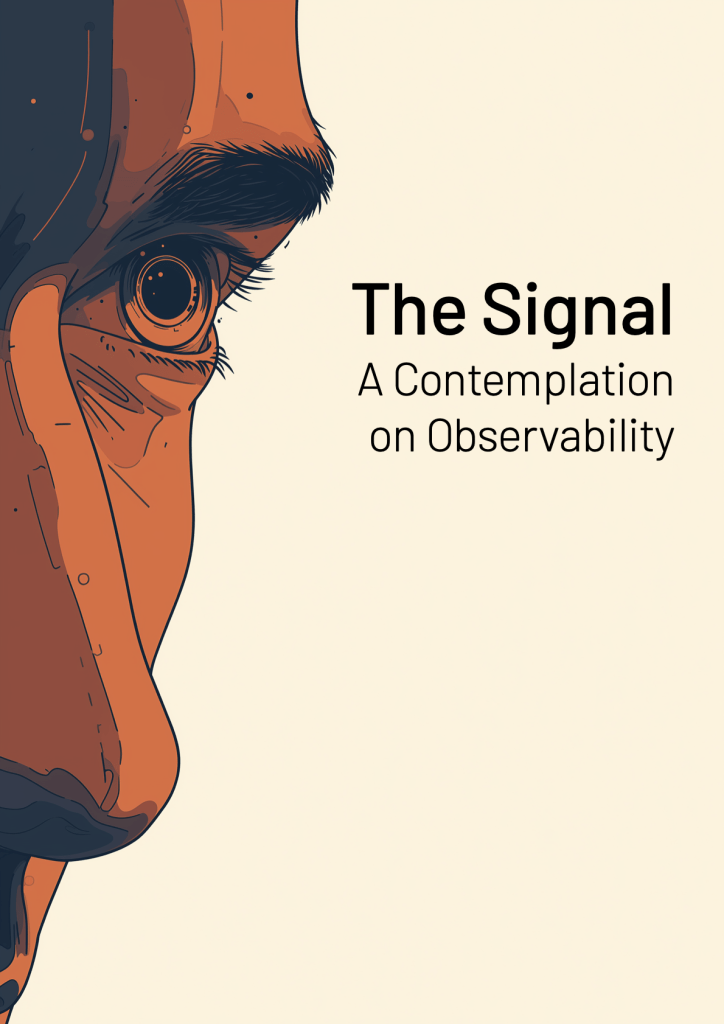
This booklet offers a profound cybernetic and biosemiotic perspective on system sensing. It moves away from the commodified definitions of modern telemetry and instead frames observability as a living, interpretive topology of human and machine actors. It introduces a framework that represents a fascinating shift away from traditional, heavy event-sourcing toward a more holistic, biologically-inspired model of complex sociotechnical systems.

Substrates 2.6 Released
Substrates 2.6 introduces a rolling Window view emitted via Flow.window(int), with a full operator suite. It also adds Flow.scan, a stateful, type-changing fold with separate state and output types, and Flow.flow(…), a subject-aware composition factory.

Substrates 2.5 Released
Substrates 2.5 introduces a new Bank interface for managed conduit pools with lazy materialization. The Fiber pipeline gains six new operators: distinct(), distinct(capacity), route(), tee(), and when(), which address duplicate suppression, conditional fan-out, and inline sub-fiber branching. In addition, a the new streak() operator now emits the Nth consecutive emission matching before rearming.

Substrates 2.4 Released
Substrates 2.4 lands one focused API addition (subject-aware fiber attachment), three model-level cleanups, a small set of new Circuit probes, and a wave of spec corrections that tighten contracts users were already relying on.
Substrates 2.3 Released
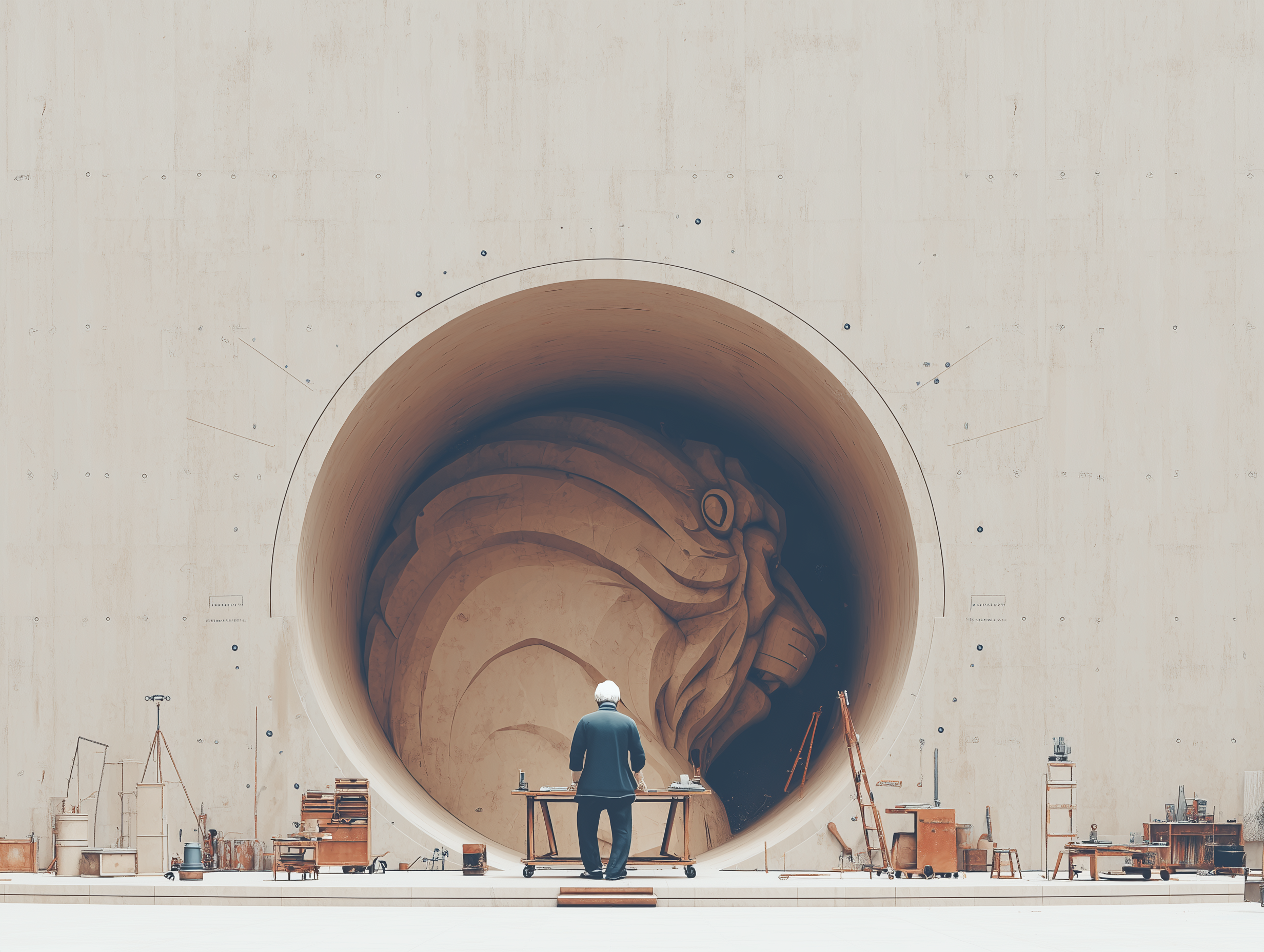
Substrates 2.3 introduces a refined version of the Substrates 2.2 Fiber/Flow split. It features sharper naming conventions, symmetrical attachment, and a few missing conduit overloads.

Substrates 2.2 Released
The 2.2 release of Substrates, including both the Java API and Specification, is now out. The pipeline abstraction has been split into Fiber for per-emission operators and Flow for type-changing composition, giving each concept a sharper, single-purpose API.
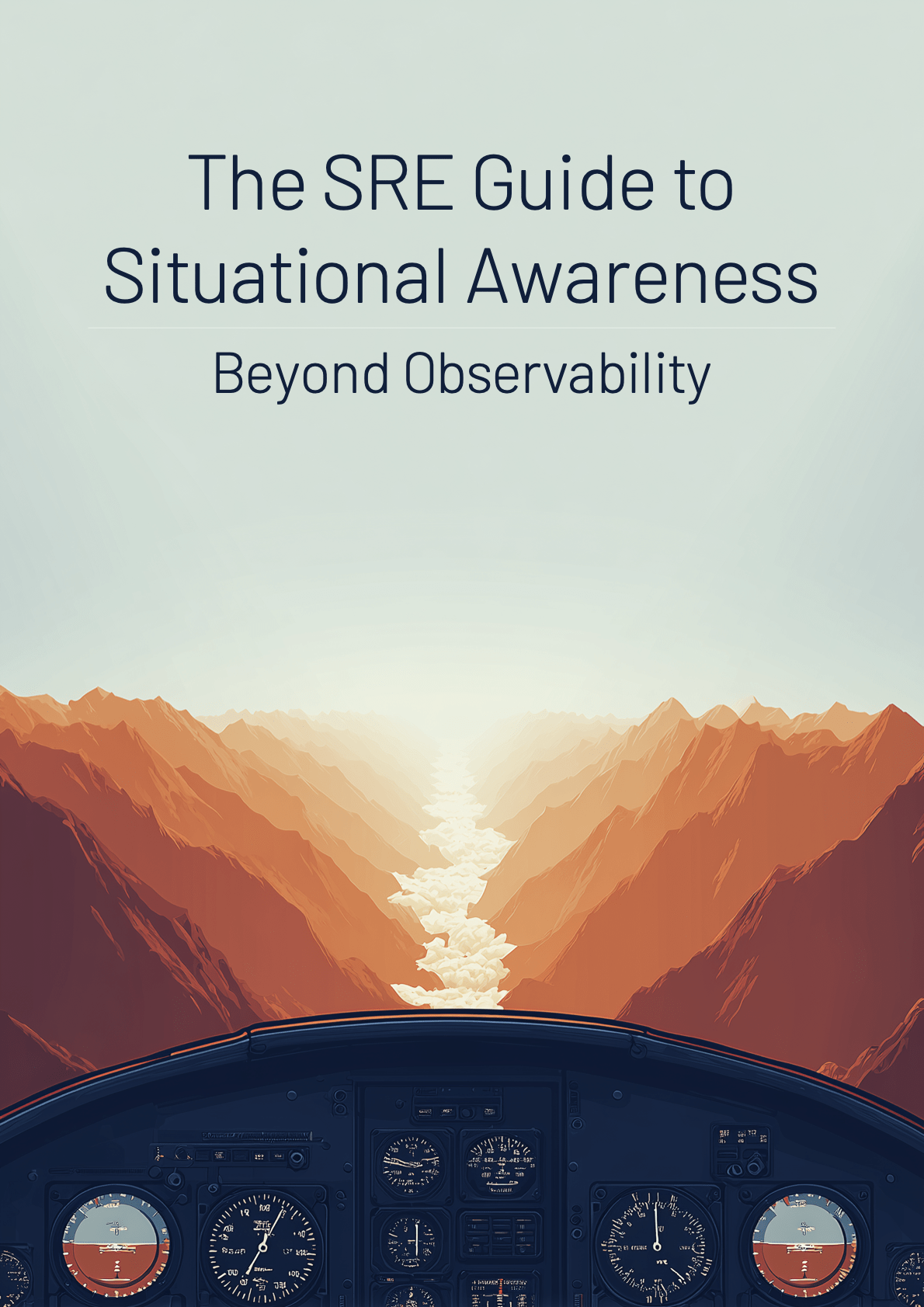
The SRE Guide to Situational Awareness
This booklet is for anyone who has come out of an incident wondering what was missed, or realised too late that they and a teammate were responding to different situations. It trains situational awareness as a disciplined six-station loop: perception, interpretation, situation formation, projection, action, and outcome. The domain is Site Reliability Engineering (SRE). The model is not. The goal is a reshaped attention, carried into the next incident as reflex.

Substrates 2.1 Released
The 2.1 release of Substrates, encompassing both the Java API and Specification, is now accessible on GitHub. In this release, several pipe flow operators have been added, including change, deadband, delay, edge, hysteresis, inhibit, pulse, rolling, steady, and tumble.
Transport and SubstrATE
A new booklet delves into the underlying assumptions of OpenTelemetry and Substrates regarding the nature of computational systems. It explores their ontological commitments, epistemological stances, causal models, and theories of attention. The booklet also examines why two specifications operating in the same domain produced charts of entirely different landscapes.

Substrates 2.0 released
The 2.0 release of Substrates, encompassing both the Java API and Specification, is now accessible on GitHub. This substantial update firmly establishes Substrates as the sole foundational solution for delivering the next generation of intelligent software systems, surpassing rudimentary data collection and telemetry analysis.
Situating Context
This distillation of systems theory and observability reveals the deeper architectural truths of meaning generation, eliminating the noise of conventional technical discourse that focuses solely on data collection and organization. The booklet challenges how human-machine interaction should be engineered, suggesting that software must be designed to help human actors seamlessly transition from recognizing state to grasping a situation.
Substrates 2.0 incoming
Work on the next release of Substrates has begun. The release will focus on surface reductions and efficiencies for common usage patterns of communication pipes, as well adding a new set of operators for emission control and transformation.

The Subject Of Situation
The Seeing Systems quartet assumed a subject who could read signs, recognize patterns, hold narratives, and project futures. This essay examines that assumption. Situation is a relationship between a bounded agent and its circumstances. Meaning requires a subject under constraint. The observability industry built infrastructure to capture everything and addressed it to no one. Situational intelligence begins with the reintroduction of the subject.

Substrates API Spec
This specification defines structural primitives, behavioral contracts, and lifecycle semantics for computational networks in which typed values flow through governed topologies with precise ordering guarantees. Independent of any programming language, runtime, or transport mechanism, a conformant implementation may be realized as an in-process library, a networked service, or any combination thereof.
Serventis API for Java
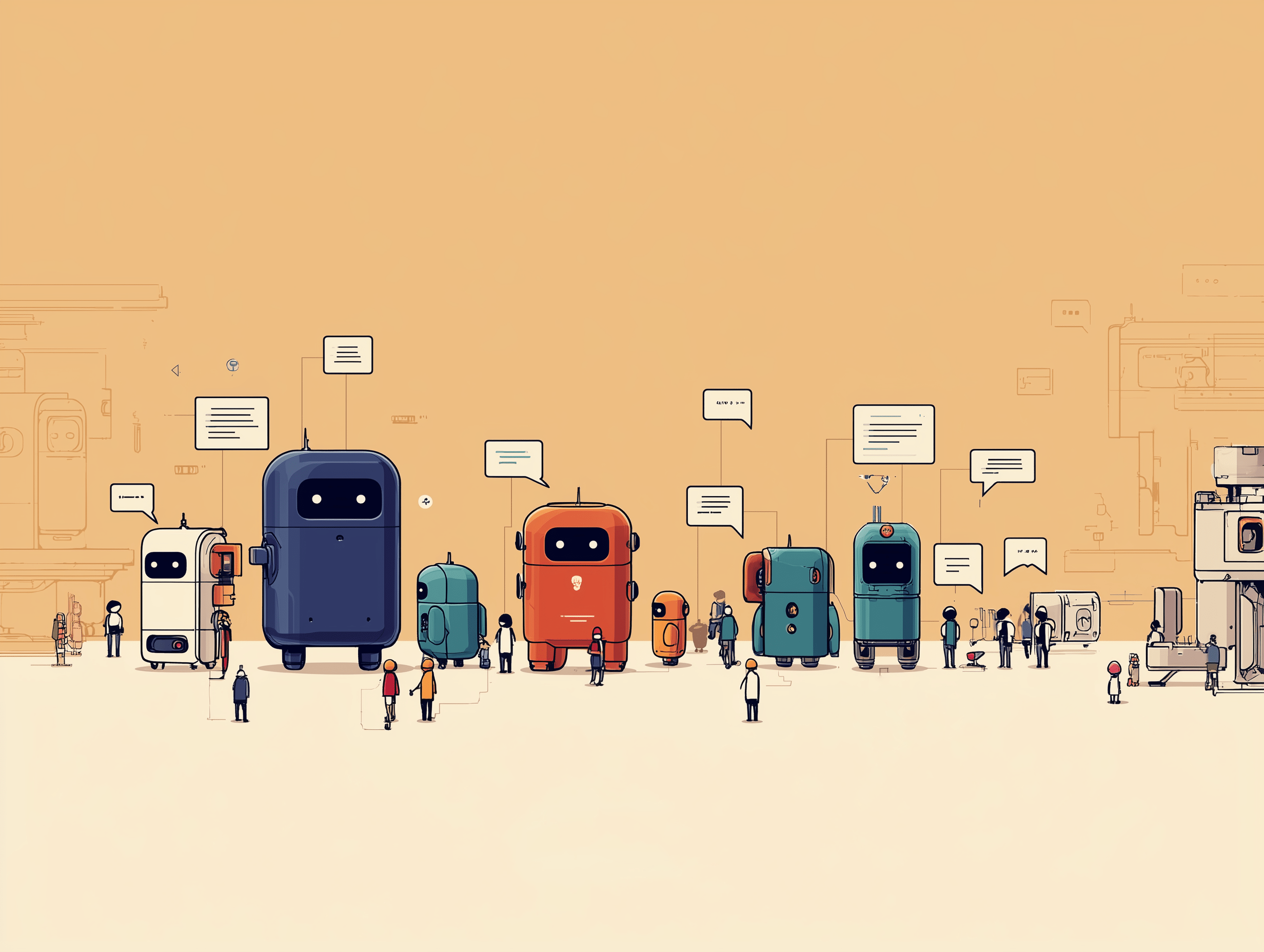
Serventis is an extension module built on Humainary’s Substrates that provides comprehensive observability primitives for distributed services. It enables structured monitoring, assessment, and reporting of service health, performance, and interaction patterns through semantic signal emission.
The Anxiety of Measurement
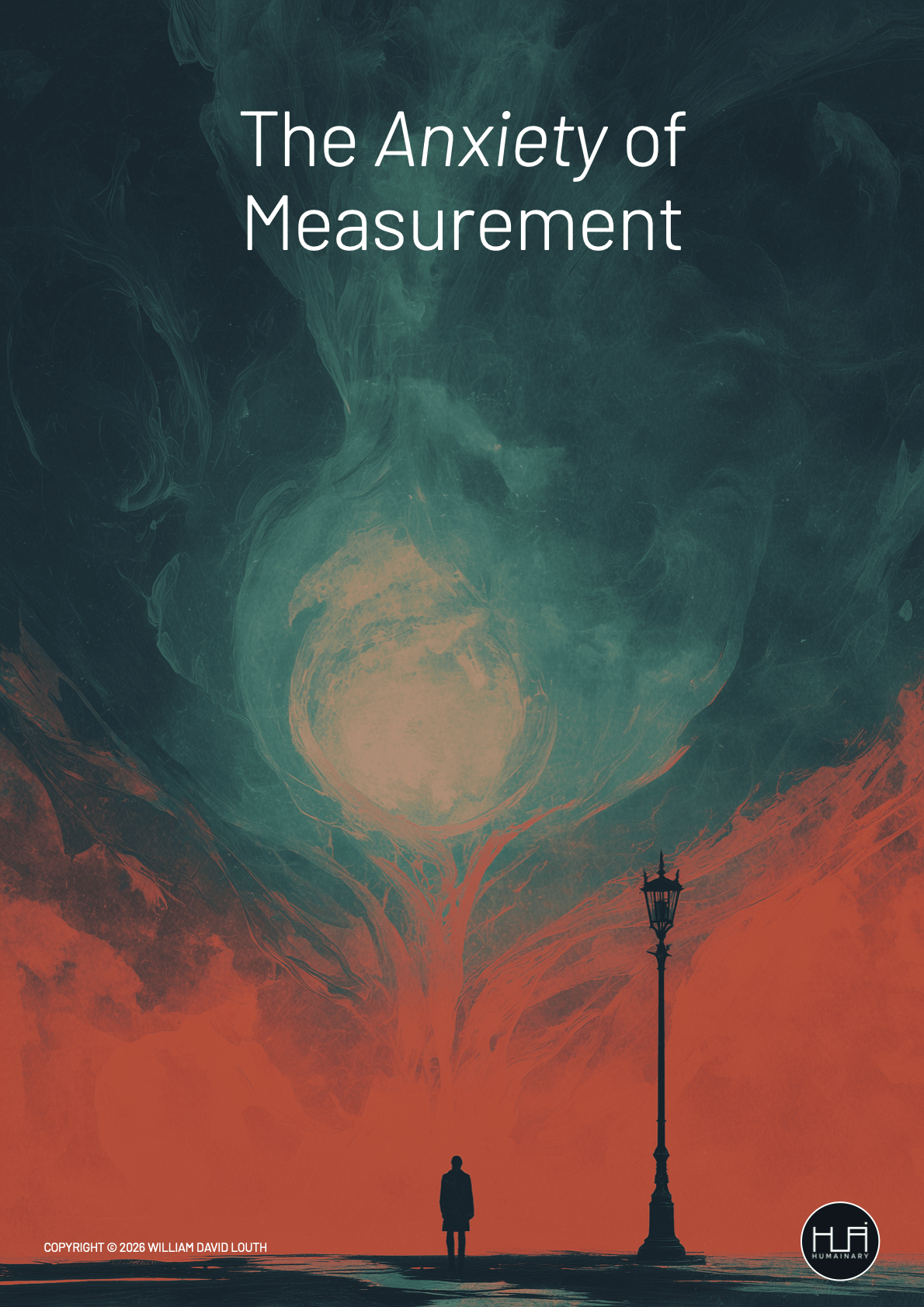
Measurement without interpretive ground creates anomalies. The body senses, compresses, and escalates continuously. The wellness industry distrusts this intelligence, while the observability industry never trusted it. Both incur the same entropy tax: cascading costs from meaningless signals. The question is not how to see everything, but how to build systems that trust their intelligence to signal when something needs to be seen.
Seeing and Steering
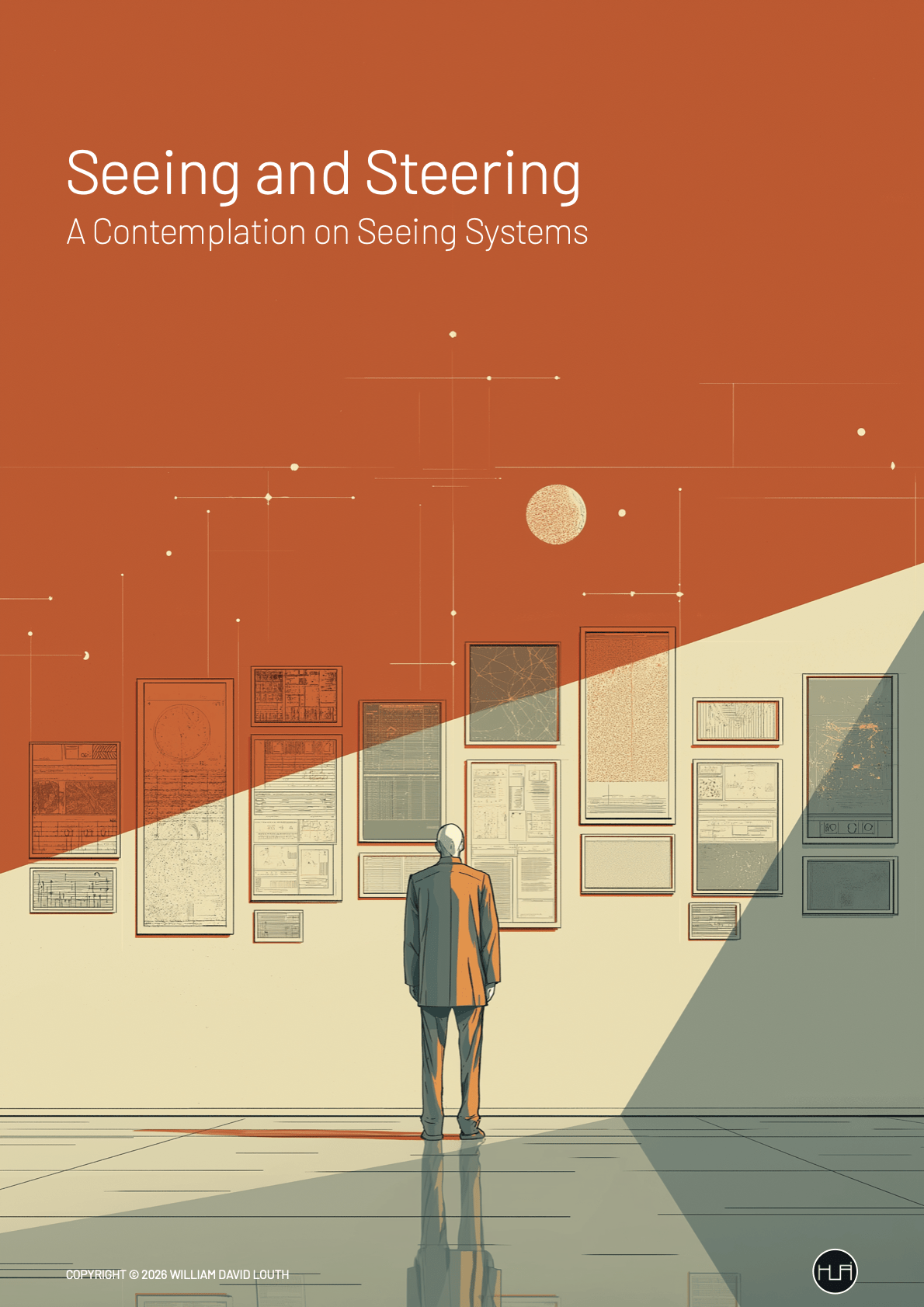
Reading a system and steering a system are two distinct capacities. We collapse them into single labels and the collapse hides which one is missing. Most systems sense elaborately and steer poorly or not at all. Once you see the separation, you can no longer pretend the whole is present.

site under reconstruction
This website is undergoing a complete overhaul, including all previously published articles and booklets.