
Core Thesis: Modern software systems are designed to be highly sensitive to every event, recording metrics, logs, and traces. However, they lack “proprioception”—the innate ability to integrate these sensory inputs into a coherent understanding of their current state. Instead of continuously exporting raw evidence to external dashboards and AI agents for interpretation, systems require an architectural layer of proprioception.
We have spent two decades making software systems extraordinarily sensitive. They can record every request, every exception, every allocation, every queue transition, every network hop, every retry, every database call, every change in latency, and increasingly every interaction between autonomous agents.
When those systems begin to fail, a simpler question remains unanswered: What is happening to me?
They produce evidence. Someone else has to construct the situation. That someone was traditionally the operator. Increasingly it is an AI SRE. This should concern us. The rise of the AI SRE is often presented as the arrival of intelligence in operations. AI is being summoned because the operational architecture beneath it stopped short of performing its own interpretation. We built systems capable of feeling every pinprick, and gave them a thin layer of proprioception. And now we are attaching a prosthetic brain and asking it to infer balance from pain.
Sensation Prior to Self-Knowledge

Biological intelligence experiences its body as an integrated condition, not as a collection of independent sensor readings. Your nervous system continuously integrates pressure measurements from your feet, tension readings from individual muscles, vestibular impulses from your inner ear, and the recent firing history of thousands of neurons, resolving them into a single continuous state before conscious reasoning becomes involved.
Proprioception is the continuous sense of bodily configuration, movement, orientation, and capability. It allows you to experience a leaning body, an extended limb, an unstable surface, a loss of balance, and a movement that is possible.
Software systems carry a thin equivalent of this capacity.
They emit enormous quantities of telemetry about their activity. That telemetry accumulates as evidence, and the continuously maintained account of the system’s own condition remains forever stored awaiting reconstruction.
A service can tell us that 20,000 requests occurred. A tracing system can show their paths. A metrics backend can calculate latency distributions. A logging platform can retrieve the exceptions.
Questions not answered:
What state is this service in now?
What does that state mean for the larger system?
The Record Became the World
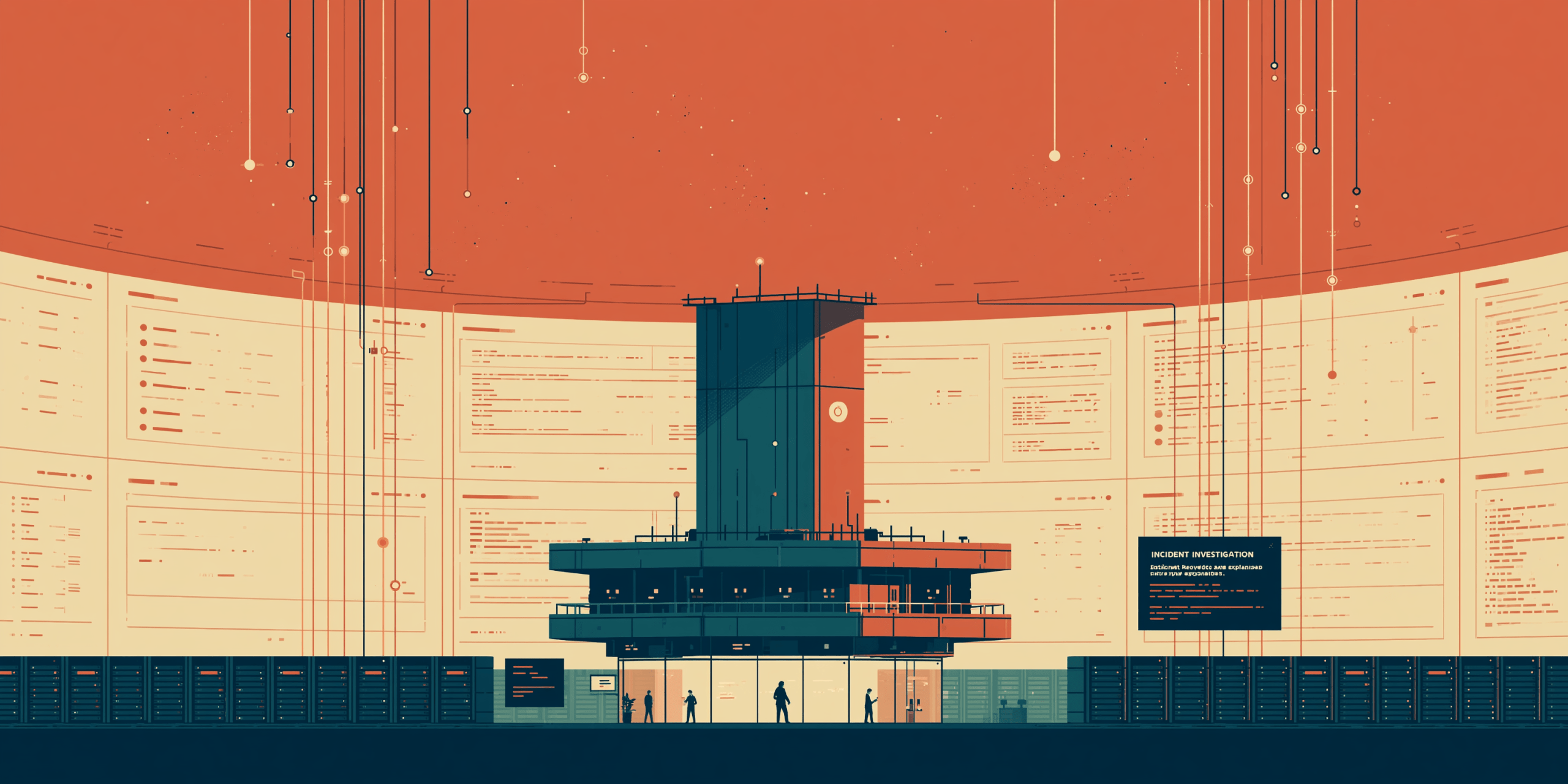
Modern observability’s dominant abstraction is the record. A log record indicates an event at a specific time. A span describes an activity between timestamps, with attributes describing the activity and its relationships. A metric point records or summarizes a measured quantity. These representations are useful as evidence of happenings.
Their historical success also shaped the architecture around them. Instrumentation emits records. Collectors transport records. Backends retain records. Indexes organize records. Query languages retrieve records. Dashboards visualize selected records. Incident investigation reconstructs an explanation from records.
The industry became highly capable at preserving and navigating operational evidence, but the transformation from evidence to operational meaning never developed. This distinction is crucial when systems grow.
A record is linked to a specific event, while a situation describes a state of affairs.
For instance, “Connection pool timeout at 14:03:17” is an event, while “Database access capacity is deteriorating and constraining checkout throughput” is a state of affairs.
Control operates on states of affairs.
The Economics of Deferred Meaning
There are historical reasons observability evolved this way. Telemetry businesses grew around ingestion, retention, indexing, and querying. Greater fidelity created greater analytical optionality. Keeping the raw material allowed customers to return later with questions nobody had anticipated when the software was instrumented.
This produced a powerful economic and architectural principle:
Preserve the evidence now. Decide what it means later.
The principle solved some real problems. It also moved semantic work downstream.
A system provided increasingly detailed descriptions of events. Consumers took on the responsibility of determining significance. As the volume grew beyond human capacity, the industry developed faster search.
- Then better correlation.
- Then richer dashboards.
- Then anomaly detection.
- Then service maps.
- Then natural-language interfaces.
Now AI agents.
Each increased our ability to recover some meaning from the data accumulated. The underlying interpretive work continued to occur at the same location throughout. Meaning continued to be constructed at consumption time.
The Cost of Late-Binding Meaning
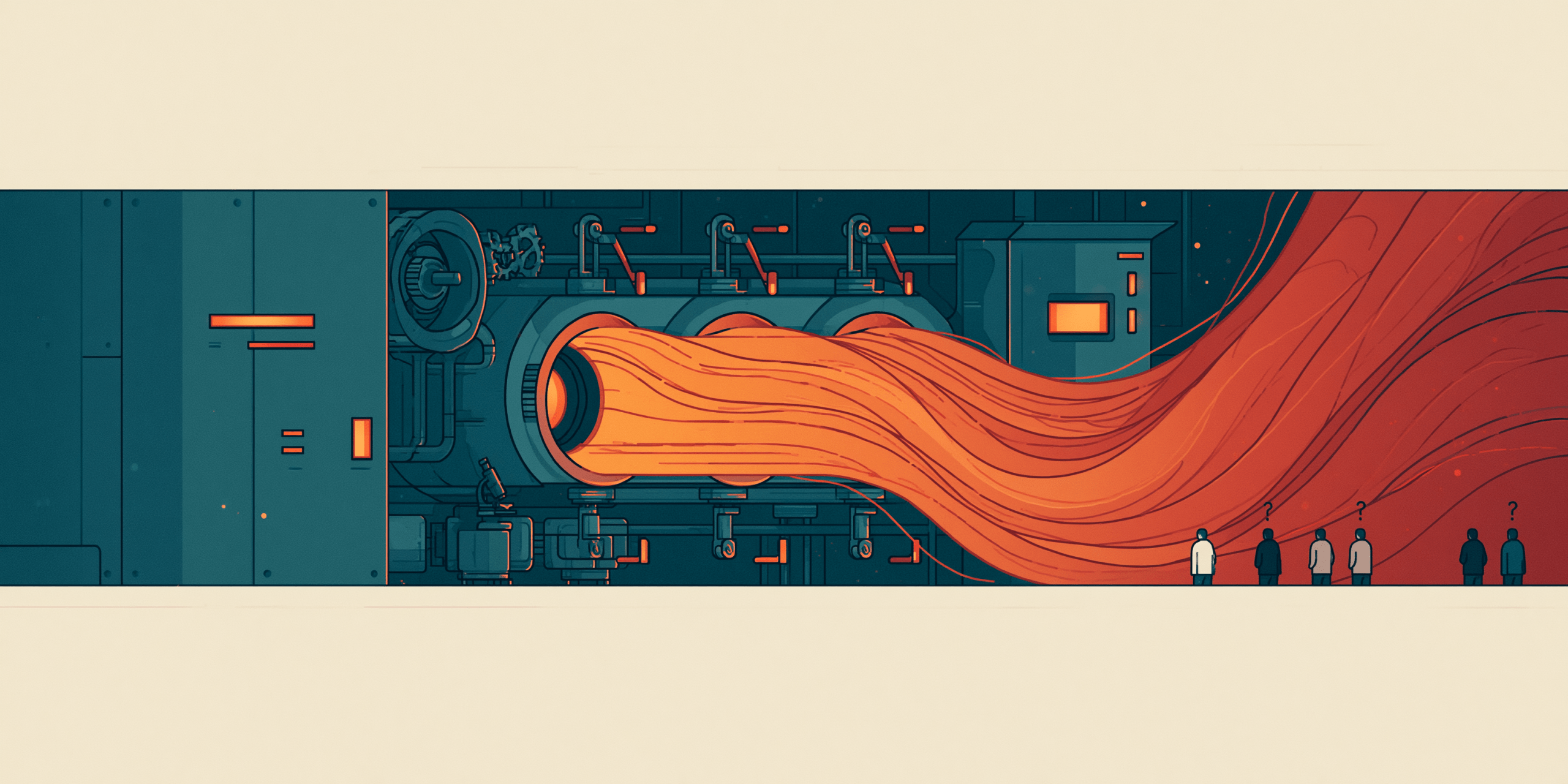
Software engineers are familiar with late binding. Deferring a decision preserves flexibility. Runtime work increases as a consequence. Observability extended late binding into the semantic architecture of operations.
We deferred the most important question needed to be answered:
What does this observation mean for the current condition of the system?
The resulting pipeline looks something like this:
emit → transport → retain → retrieve → correlate → reconstruct → interpret → decide
The first half is highly optimized. The second half begins at the point somebody becomes concerned. That creates what we might call meaning debt. Every observation whose significance remains unresolved becomes a fragment that some future consumer may have to interpret. During normal operation, the debt remains invisible, and engineers have time to browse dashboards, run queries, follow traces, compare deployments, and construct explanations.
During an incident, the debt becomes due. And incidents create particularly hostile conditions for semantic reconstruction. Event rates rise. Retries generate secondary activity. Dependencies enter unusual states. Causal chains lengthen. Feedback loops emerge. Topology may be changing. Telemetry volume increases. The number of plausible explanations grows. At the same time, the cost of delayed intervention is accumulating.
Such an information architecture demands the most interpretive effort when interpretation is most time-sensitive.
An operator enters the incident and must perform:
selection → correlation → reconstruction → state estimation → interpretation → projection → action
An AI SRE enters the same environment and inherits essentially the same problem at machine speed. The model receives logs, traces, metrics, topology, runbooks, deployment history, perhaps source code and previous incidents. It then compiles those fragments into a coherent operational world. Deliberation begins after this compilation.
The current generation of AI SRE systems are more like runtime compilers for operational meaning.
The source language is telemetry. The intermediate representation is an inferred model of the system.
A general-purpose model can take scattered historical fragments and generate a useful account of a changing distributed system. However, the question arises why so much of an account needs to be reconstructed in the moment, especially when much of the relevant knowledge existed earlier and was closer to the actual condition. The local subsystem possessed direct knowledge prior to conversion into telemetry and transport. We discarded situated understanding, retained observations, and later relied on an inference system to recreate the understanding.
From “What Happened” to “What Is True”

A more mature operational architecture would progressively transform observations into increasingly useful representations. A simple ladder might look like this.
- Record
X happened at T.
Evidence of an occurrence. - Metric
X is happening N times per second.
A quantitative summary of repeated observations. - State Proposition
X currently holds.
A maintained assertion about a subject or relationship. - Situation
X holds under these circumstances and carries this significance.
A situation brings together state, actors, relationships, purpose, constraints, trajectory, and capability. - Operational Proposition
Given this situation, these outcomes are threatened and these transitions are currently possible.
This is material a controller can use. Each step performs compression. Each step also introduces interpretation. And each interpretation can carry provenance, confidence, freshness, and supporting evidence. The goal is continuous construction of useful meaning, built progressively as context accumulates.
Progressive Semantic Binding
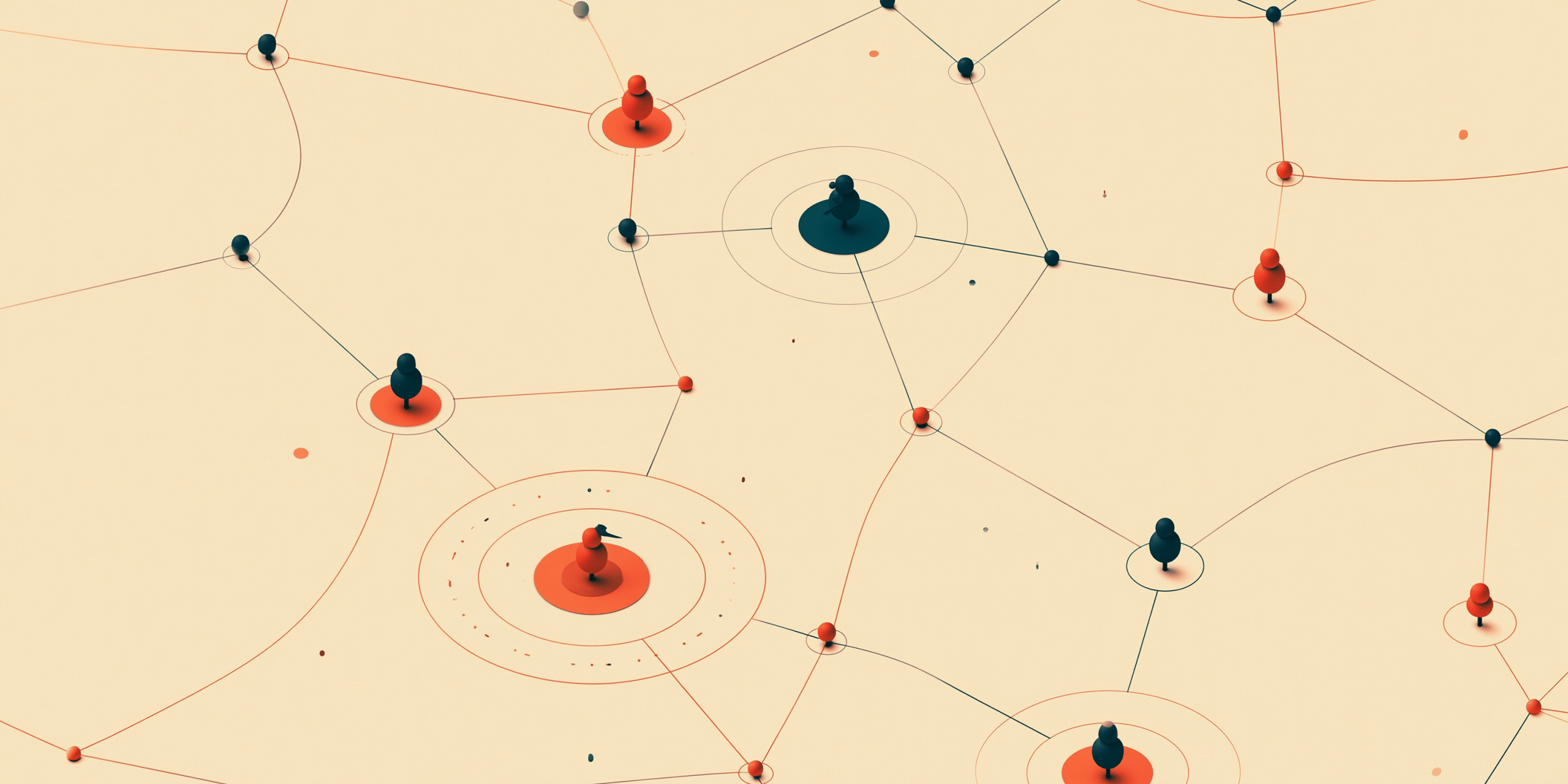
Each component understands its own local condition. A database client determines its own remaining capacity reliably. A single service determines its own operational state reliably. Meaning binds at the earliest layer possessing enough context to make a reliable judgment. That gives us progressive semantic binding.
At the local level, components can establish propositions about their own state. At relationship boundaries, actors can establish propositions about interactions and dependencies. At subsystem levels, these propositions can be composed into broader state. At situational levels, purpose, trajectory, constraints, and available actions can be incorporated.
Meaning accumulates as context accumulates. The architecture starts resembling a distributed perceptual system. Local actors perform local discrimination, and higher layers compose those judgments. The result is an operational world model that continuously evolves with the system it represents.
This is much closer to how scalable intelligence operates in environments with sensory overload.
Where High-Order Intelligence Belongs

Once the system can maintain situations, the role of the AI SRE changes dramatically.
The agent receives propositions such as: Fulfilment capacity is degrading. Payment reliability is declining with high confidence. Retry compensation is temporarily preserving completion rate while accelerating resource exhaustion. Current demand growth makes saturation increasingly likely. Three recovery affordances remain available.
Now high-order inference can begin with questions worthy of high-order inference:
- What happens if demand continues at this rate?
- Which objective should be protected first?
- What would happen if retries were suppressed?
- Would shifting traffic create instability elsewhere?
- Which intervention preserves the greatest recovery capacity?
- What consequences emerge across competing stakeholders?
- How confident are the projections?
- When should control return to the previous regime?
These are problems of projection, counterfactual reasoning, planning, judgment, coordination, and control. They deserve expensive models. Parsing millions of low-level records to rediscover that a queue is overloaded deserves something much cheaper and much closer to the queue.
Crisis-Time Economics
AI also makes an old inefficiency easier to see. Human interpretive cost was difficult to meter. It appeared as investigation time, cognitive load, interrupted engineering work, incident duration, on-call fatigue, and organizational uncertainty. AI makes part of the same cost explicit.
- Every irrelevant record may become another retrieval candidate.
- Every unnecessary trace may become additional context.
- Every missing state model may require more inference.
- Every unresolved relationship may trigger another search.
- Every piece of meaning deferred upstream can become tokens, compute, latency, etc.
Telemetry’s economics have undergone a shift. Previously, the primary concern was determining how much data could be affordably retained. However, a new question has emerged: how much meaning can we afford to leave unresolved? This evolving question will increasingly influence the architecture of intelligent infrastructure.
Observability and Controllability
This leads back to a distinction central to software operations. Observability concerns what can be inferred about the internal condition of a system from available information. Controllability concerns the system’s capacity to move from one state toward another through available interventions. Controllability requires operational propositions.
A controller needs to know the state of affairs, the direction in which it is evolving, the constraints surrounding it, the transitions currently afforded, and the likely consequences of intervention. Extreme sensory resolution provides volume and fidelity of observation, a different property from the operational propositions controllability requires.
An architecture can accumulate enormous observational capacity at the perceptual layer, with its control mechanisms starved of operational meaning. That is exactly where the AI SRE gets summoned.
- It is asked to bridge the gap between records and control.
- It reconstructs state.
- It infers significance.
- It assembles the situation.
- It projects trajectories.
- It identifies possible actions.
- Then, finally, it begins deciding.
The agent is compensating for an architectural discontinuity between perception and action.
The Proprioceptive Layer

Proprioception offers a useful way to describe what comes next.
A viable intelligent system needs a continuously maintained sense of itself.
- Its current condition.
- Its relationships.
- Its orientation.
- Its constraints.
- Its momentum.
- Its capabilities.
- Its available transitions.
- Its uncertainty about each of these.
Telemetry can contribute some sensory evidence to that process. A mature operational system continually transforms that evidence into propositions about itself and its environment.
Such a system can communicate:
- I am approaching capacity.
- My ability to satisfy this dependency is declining.
- The mechanism currently protecting availability is consuming my recovery margin.
- This relationship is behaving outside its expected regime.
- I can still recover through these transitions.
- This intervention is becoming unsafe.
Those statements form a very different interface between systems and intelligence.
An AI agent subscribing to them receives a world already structured for reasoning. A human operator receives the same advantage. The system becomes an active participant in constructing situational awareness.
Infrastructure After Observability

Future infrastructure software will require more advanced perceptual design. Past records remain vital for diagnosis, auditing, model improvement, learning, and forensic review.
The operational path will gain additional representations.
- Systems will increasingly maintain state propositions.
- Subsystems will compose situations.
- Relationships will carry judgments.
- Confidence and freshness will become first-class properties.
- Possible transitions will be expressed as affordances.
AI agents will reason over these structures and test potential interventions against models of consequence.
The flow of operational intelligence will move through something closer to:
observation → sign → proposition → situation → projection → action
This is a movement from telemetry toward cognition. It also places intelligence where it can contribute most.
A nervous system should perform the continuous perceptual work required to know the body’s condition. A brain should receive that structured perception and decide where to go. We currently ask the brain to infer the existence of the body from a stream of pinpricks. Infrastructure can do better. The real advance will come when systems continuously construct and communicate what is true of them, what those truths imply, and what possibilities remain open.
At that point, the AI SRE can finally address the situation. It can start the tasks that truly demand intelligence.