- Beyond the Error Budget
Google designed the “error budget” to solve a specific problem: ending the eternal war between developers (who want to ship fast) and operations (who want stability). For that, it works well. However, the tech industry has since misused the error budget, turning it into a stand-in for understanding system reliability. But an error budget is just a backward-looking ledger. It acts as an emergency brake that only pulls after the crash. To build truly resilient systems, organizations must graduate from simple accounting to Situational Intelligence—the ability to understand context, anticipate risks, and adapt in real time.
- Agentic Coding: Death by a Thousand Plans
Multi-agent coding systems can satisfy every local contract while the program, the evolving conception that makes separate changes belong to one system, erodes. The loss begins upstream, in plans whose divisions acquire authority while the conception that justified them becomes optional. Software factories automate doing and knowing; the program lives in the thinking between them. Coherence holds when the people responsible for the system steer, and the production process gives their conception authority over the plan.
- Observability is a Rung
Observability is not an all-encompassing catch-all for system operations, but a single, distinct middle rung in a strict capability hierarchy that depends on lower-level diagnostic inputs and exists to enable higher-level situational awareness, decision-making, and control.
- The Semiotic Agent
AI agent architectures are semantically inefficient because they constantly serialize internal states into natural language prose only to pay probabilistic models to re-interpret them. To achieve scalable, intelligent behavior, AI must transition from purely linguistic systems to semiotic agents—architectures that convert expensive linguistic reasoning into persistent operational distinctions (“semiotic compression”), reserving rich language processing only for novel, ambiguous, or high-consequence situations that cross a threshold of significance.
- The Age of Infinite Prototypes
While generative AI has drastically reduced the cost of creating demonstrable software, frictionless generation cannot replace the reflective inquiry of genuine product design. As teams quickly generate screens, workflows, and schemas, the instant gratification of a working prototype often obscures whether a feature actually solves a real problem or merely fulfills a prompt. When these interactive artifacts are prematurely elevated to specifications, they embed unexamined assumptions into production code, driving conceptual fragmentation across organizations and creating uncoordinated systems. Ultimately, true product judgment lies not in building software faster, but in exercising the critical discipline required to question assumptions, refine core relationships, and eliminate unnecessary creation before a flawed first guess defines what was needed.
- Mastering Observability: The Single Pane
We build dashboards under the assumption that if we gather enough metrics, answer every query, and fill every pixel, our systems will finally reveal themselves. But crowding data into a single pane of glass doesn’t create understanding—it just shifts the cognitive burden of correlation onto the operator. This post uses a quiet fable about a watchtower, a master, and an eager apprentice to expose the traps of modern telemetry: dashboard sprawl, Conway’s Law in metric design, and the subtle difference between tracking data and understanding a system.
- The House Behind the Search Box
A growing telemetry archive can reveal an organization’s failure to learn. When familiar incidents still require reconstruction from logs, traces, and metrics, evidence accumulates without improving recognition. The search box conceals the pile and the habits that produce it. Situational awareness requires experience to change the observer: patterns become recognizable, expectations become explicit, and evidence can recede as understanding strengthens. Progress means reconstructing less of the past to understand the present.
- Mastering Observability: The Crossing in Situ
A river rises, a bridge weakens, and a traveler approaches. Each observation is clear on its own, yet intelligence begins only when they become one situation: something unfolding, affecting different actors in different ways, and demanding a decision before certainty arrives.
- Signification: How Organizations Learn to Name What Matters
Organizations often face a hidden breakdown when operational metrics report smooth sailing, but ground reality feels otherwise. This breakdown stems from an inability to identify what truly matters. This post delves into signification, the crucial process of transforming weak, unclassified signals into shared meaning. It also explains why aggressive reporting frameworks and AI compression pose a threat to genuine organizational learning.
- Wide Events: How Observability Turned Uncertainty Into a Business Model
The observability industry has exploited the concept of “unknown unknowns” to turn boundless data collection into a lucrative business model, shifting away from sound engineering principles. While capturing wide, high-cardinality events originally served to prevent the premature loss of useful telemetry, it has evolved into a culture of data hoarding driven by the fear that any uncollected attribute might be crucial in a future, unforeseen incident. Because there is no natural constraint or principled stopping point to what might be useful, this cycle of “unbounded description” and “unbounded fear” traps organizations into perpetually expanding their telemetry surfaces, ultimately benefiting the vendors who monetize this endless stream of uncertainty.
- The Business Is Not in the Telemetry
Business observability cannot be reconstructed from technical telemetry alone. To understand a business while there is still time to act, its states, constraints, commitments, and available interventions must be instrumented where they actually change—in the workflows that perform the work—and then connected to the technical systems on which they depend.
- Situation Is the Unit of Intelligence
Modern observability has created a sophisticated evidence layer (metrics, logs, traces, and topologies) but stopped there. Measurement is automated, but recognition remains manual. Every intelligent system must answer the foundational question: What situation am I in? A situation is not just telemetry or context; it’s the minimal actor-relative composition of evidence, judgment, and purpose that enables projection, affordance, and action. Observability, properly conceived, begins with recognizing a situation, not collecting data.
- Mastering Observability: Visibility is Not Observability
We keep building brighter lamps and calling the result observability. But making more of a system visible does not mean we understand its state, structure, purpose, or situation. And when the light becomes too bright, something stranger happens: visibility itself begins to impair our ability to see.
- Observability Without Proprioception
Software systems accumulate extraordinary sensory capacity while carrying only a thin equivalent of proprioception. Telemetry provides records; situations require an integrated sense of condition, orientation, and available transitions. This post traces the path from observation to actionable meaning, and locates where high-order intelligence belongs once systems can maintain their own state.
- Mastering Observability: From Mechanism to Meaning
Through a philosophical dialogue between a master and an apprentice, this post explores the true purpose of observability. Discover why recording every system operation isn’t enough, and learn how to elevate your focus from simply tracking mechanisms to understanding meaningful outcomes, conditions, and consequences.
- Sampling: Observability’s Structural Bankruptcy
Sampling manufactures silence. By deleting traces before their evidence becomes durable meaning, observability breaks continuity, makes absence ambiguous, and exposes the missing layer between captured events and operational knowledge.
- Mastering Observability: From Signal to Situation
What kind of mind do our observability tools build? Join a master and an apprentice as they trace the evolution of observability—from signals that interrupt and archives that hold evidence, through agents that suggest where attention belongs, toward a fourth layer that situates the operator directly within the system’s condition. Here, signs gather into a field of meaning: the boundary, the direction, the strength, the action still available. This is the layer where observability reaches its purpose.
- Why Observability Keeps Producing the Same Product
Each new wave of observability tools tends to resemble earlier versions, and this pattern has an underlying cause. The industry returns to familiar fundamentals: systems exchange telemetry, OpenTelemetry collects it, and vendors store, link, refine, and present it through more elaborate dashboards. The core assumption is that accumulating enough data and processing it intensely will finally reveal what is occurring. This conviction has slowed advancement.
- Why Observability Needs Controllability
Observation and control are two sides of the same coin. This post explores what happens when they drift apart: telemetry turns into a static archive, projections feel out of reach, and AI gets stuck with the limits of the data it’s handed. A real incident shows the difference when the pair reunites—treating situations as key players, pulling evidence exactly when needed, and checking interventions before anyone gets paged.
- Observability Engineers Don’t Do Observability
I doubt any observability engineer performs work close to what observability should represent. Most of those holding this title do not actually increase observability; instead, they build the machinery they expect will eventually produce it. They instrument services. They deploy agents. They configure collectors. They operate clusters. They manage storage. They tune retention. They build dashboards. They define alerts. But none of that is observability. It’s a little like confusing the construction of a telescope with astronomy. Building a better telescope doesn’t automatically mean you understand the stars.
- Mastering Observability: The Three Lamps
Much of what we label observability might simply be diagnostics: a collection of traces, logs, and metrics awaiting interpretation once problems arise. Genuine observability starts sooner—when a system is built to convey the differences that expose its state, its hazards, and potential outcomes.
- Seeing Systems: Operations and Outcomes
Whenever we encounter a phenomenon, there seem to be two fundamentally different ways of thinking about it. One is in terms of operations. What happened? What moved? What called what? Operations describe mechanisms. They explain how something works. They can always be decomposed into smaller operations, each of which can be decomposed again. Every task becomes a collection of subtasks. Every mechanism reveals another mechanism beneath it. There is almost no natural stopping point. The other way is in terms of outcomes. Did it work? Is it safe? Is it healthy? Will it survive? Outcomes tell us what happens, not how it happens. They’re also judgments, showing us if something really matters.
- Mastering Observability at the Source
Presented as a didactic dialogue between a master and an apprentice, this piece explores the core philosophy of software system observability. It critiques the common industry impulse to collect and transmit comprehensive raw telemetry, illustrating how this approach shifts an overwhelming cognitive burden onto downstream engineers who must sift through mountains of irrelevant data during system failures. It is a compelling read for anyone looking to build more sustainable, human-centric monitoring paradigms that prioritize clarity and system integrity over raw data hoarding.
- Observability: The Interpretive Ladder
Do we have metrics, logs, and traces? This is the question most teams use to assess their observability. It is answered with an inventory: count the instrument types, and when all three are present, the assessment is complete. The outputs are counted; what the outputs let anyone do goes unexamined. This post works from another question: What interpretive function are we performing here? his question is answered by naming an operation and placing it on a scale. The scale runs from acknowledging that something happened to projecting where a situation is heading. Each rung is an interpretive operation, and each operation determines what can be inferred from an output and where that inference takes place.
- Observability: The Unsustainable Path
The observability industry must unequivocally state that its current approach is unsustainable. The reason is not that observability is redundant; on the contrary, it is becoming increasingly crucial. The systems we construct are becoming increasingly complex, unpredictable, and unreliable, and the need to comprehend their operations has never been more pressing. However, the industry’s persistent solution is fundamentally flawed. When faced with uncertainty, the industry resorts to collecting more data. This approach relies on the assumption that by gathering more data, preserving context, and transmitting enough records to various backends, a deeper understanding will eventually emerge. It will not.
- What Blind Systems Leave Behind
Modern software has learned to see itself through traces. To the software industry, this approach feels natural. Systems are complex, so we trace them. Services are numerous, so we correlate them. Events are dispersed, so we collect them into a path that we can maintain. The trace appears to be the obvious starting point for comprehending a system. However, it is an unusual thing to construct. Surprisingly, most systems in the world comprehend flow and function far more effective without the need for a trace.
- To Observe Agents we need Signs not Traces
For many, traces seem to be a fundamental building block of telemetry. Computers operate through a series of calls, with each procedure triggering the next, resulting in a cascading chain of invocations. When telemetry is organized around traces, it appears to be an intrinsic part of the machine’s architecture. Tracing essentially records the machine’s calls. While this intuitive understanding is helpful, it falls far short of providing a comprehensive grasp of systems.
- OpenTelemetry is not Observability
An organization can adopt OpenTelemetry (OTel): every service emits spans, every host reports metrics, and data flows perfectly through the collector into a store. The pipelines are healthy, and the dashboards are full. Yet, if you ask whether the system itself is healthy, the data alone cannot answer. Observability is a property of a system: it means a system’s internal state can be inferred from its outputs. OTel transmits data records, but stops there. The vital work of inference, situational intelligence, is left unaddressed.
- Observability: Searchable Ignorance
Observability vendors have reduced observability to the ability to ask questions of data. They collect telemetry, store it, index it, visualize it, correlate it, and now verbalize it through AI agents. Each capability answers a question posed within the data. The system itself stays outside the frame. The uncomfortable truth is that enterprises are satisfied with data answerability because system answerability would expose the absence of system understanding.
- Between the Threshold and the Sentence
The modern software observability stack is fundamentally flawed because it is missing a crucial “middle layer” of actual understanding and meaning. The current industry approach has simply bolted a highly articulate AI “language layer” on top of a primitive, decades-old “threshold layer,” creating the illusion of intelligence without any genuine comprehension of how the system actually works.
- Putting the AI in Failing – DataDog and Dash0
This post argues that Datadog’s Bits AI and Dash0’s Agent0, despite the obvious polish, primarily automate evidence retrieval, telemetry record navigation, threshold-based insights, and natural-language summarization. They do not demonstrate a genuine “system model” or real-time situational intelligence that participates in regulation as incidents unfold.
- What AI SRE Tells Us About Observability
Observability, mainly a data field, kept track of what happened and showed off the system’s outputs. But it didn’t really look at how those systems worked together. Now, the language model is putting together quick stories about what’s happening based on that info. Companies are moving from just figuring out what happened to actually doing something, but they haven’t set up the models they need to really understand the situation.
- Why AI Forces Bigger Bets
There was a time when software strategy could hide inside delivery. A company could say it had a roadmap, and the roadmap would be made of features. Some would be small. Some would be ambitious. Most would take months to design, build, test, integrate, and release. The effort itself created weight. The fact that something was hard to build gave it a kind of strategic seriousness. That world is fading.
- AI SRE – The Verbalization Layer
Today’s AI SRE products aren’t autonomous operators or nervous systems. Instead, they’re verbalization layers that overlay telemetry, tickets, runbooks, and dashboards. These products are useful for summarizing known information but are structurally incapable of replacing the system model, engineering judgment, and situational intelligence required for actual operational regulation. Essentially, these products connect language models to existing operational interfaces, generating fluent summaries while leaving the underlying system model untouched.
- The False Promise of the AI Nervous System
Promising an “AI nervous system” for production infrastructure is fashionable. The pitch is enticing: centralize raw telemetry, let an AI process it, and observe autonomous monitoring and repairs. However, adding an AI to a centralized database doesn’t create a nervous system; it merely automates an external observer’s role. A true nervous system isn’t a remote brain processing and exporting data.
- The Thinking Arrow
This technical note emphasizes that true operational resilience hinges on an often-overlooked aspect: the “thinking arrow” within us. This internal process transforms raw actions, such as incidents, memory traces, and data, into valuable knowledge, including models, runbooks, and a deeper comprehension of the system. This crucial step—abduction, model-building, and quick thinking—generates the “interior” (a personal, reconstructible mental model of the system), which is essential for effective steering, particularly in unfamiliar situations.
 Google designed the “error budget” to solve a specific problem: ending the eternal war between developers (who want to ship fast) and operations (who want stability). For that, it works well. However, the tech industry has since misused the error budget, turning it into a stand-in for understanding system reliability. But an error budget is just a backward-looking ledger. It acts as an emergency brake that only pulls after the crash. To build truly resilient systems, organizations must graduate from simple accounting to Situational Intelligence—the ability to understand context, anticipate risks, and adapt in real time.
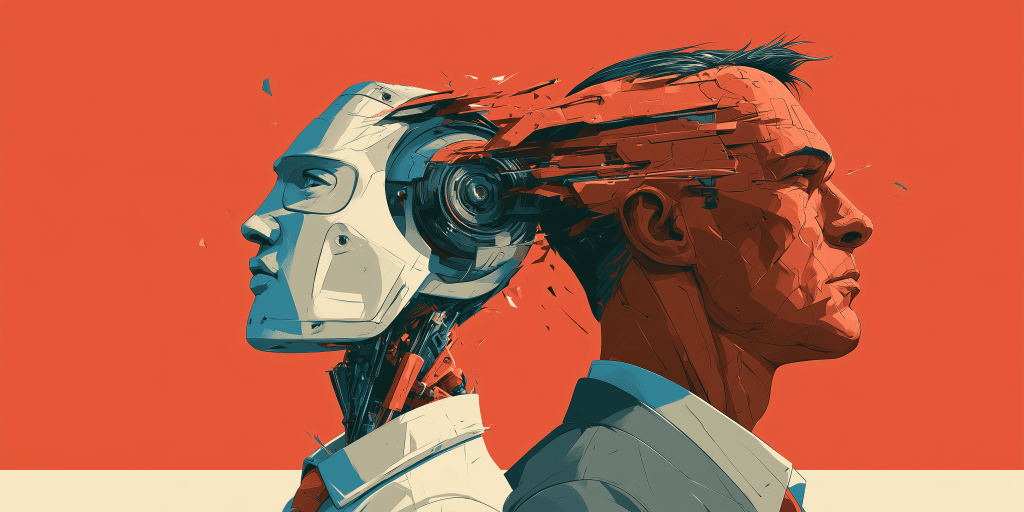 Multi-agent coding systems can satisfy every local contract while the program, the evolving conception that makes separate changes belong to one system, erodes. The loss begins upstream, in plans whose divisions acquire authority while the conception that justified them becomes optional. Software factories automate doing and knowing; the program lives in the thinking between them. Coherence holds when the people responsible for the system steer, and the production process gives their conception authority over the plan.
 Observability is not an all-encompassing catch-all for system operations, but a single, distinct middle rung in a strict capability hierarchy that depends on lower-level diagnostic inputs and exists to enable higher-level situational awareness, decision-making, and control.
 AI agent architectures are semantically inefficient because they constantly serialize internal states into natural language prose only to pay probabilistic models to re-interpret them. To achieve scalable, intelligent behavior, AI must transition from purely linguistic systems to semiotic agents—architectures that convert expensive linguistic reasoning into persistent operational distinctions (“semiotic compression”), reserving rich language processing only for novel, ambiguous, or high-consequence situations that cross a threshold of significance.
 While generative AI has drastically reduced the cost of creating demonstrable software, frictionless generation cannot replace the reflective inquiry of genuine product design. As teams quickly generate screens, workflows, and schemas, the instant gratification of a working prototype often obscures whether a feature actually solves a real problem or merely fulfills a prompt. When these interactive artifacts are prematurely elevated to specifications, they embed unexamined assumptions into production code, driving conceptual fragmentation across organizations and creating uncoordinated systems. Ultimately, true product judgment lies not in building software faster, but in exercising the critical discipline required to question assumptions, refine core relationships, and eliminate unnecessary creation before a flawed first guess defines what was needed.
 We build dashboards under the assumption that if we gather enough metrics, answer every query, and fill every pixel, our systems will finally reveal themselves. But crowding data into a single pane of glass doesn’t create understanding—it just shifts the cognitive burden of correlation onto the operator. This post uses a quiet fable about a watchtower, a master, and an eager apprentice to expose the traps of modern telemetry: dashboard sprawl, Conway’s Law in metric design, and the subtle difference between tracking data and understanding a system.
 A growing telemetry archive can reveal an organization’s failure to learn. When familiar incidents still require reconstruction from logs, traces, and metrics, evidence accumulates without improving recognition. The search box conceals the pile and the habits that produce it. Situational awareness requires experience to change the observer: patterns become recognizable, expectations become explicit, and evidence can recede as understanding strengthens. Progress means reconstructing less of the past to understand the present.
 A river rises, a bridge weakens, and a traveler approaches. Each observation is clear on its own, yet intelligence begins only when they become one situation: something unfolding, affecting different actors in different ways, and demanding a decision before certainty arrives.
 Organizations often face a hidden breakdown when operational metrics report smooth sailing, but ground reality feels otherwise. This breakdown stems from an inability to identify what truly matters. This post delves into signification, the crucial process of transforming weak, unclassified signals into shared meaning. It also explains why aggressive reporting frameworks and AI compression pose a threat to genuine organizational learning.
 The observability industry has exploited the concept of “unknown unknowns” to turn boundless data collection into a lucrative business model, shifting away from sound engineering principles. While capturing wide, high-cardinality events originally served to prevent the premature loss of useful telemetry, it has evolved into a culture of data hoarding driven by the fear that any uncollected attribute might be crucial in a future, unforeseen incident. Because there is no natural constraint or principled stopping point to what might be useful, this cycle of “unbounded description” and “unbounded fear” traps organizations into perpetually expanding their telemetry surfaces, ultimately benefiting the vendors who monetize this endless stream of uncertainty.
 Business observability cannot be reconstructed from technical telemetry alone. To understand a business while there is still time to act, its states, constraints, commitments, and available interventions must be instrumented where they actually change—in the workflows that perform the work—and then connected to the technical systems on which they depend.
 Modern observability has created a sophisticated evidence layer (metrics, logs, traces, and topologies) but stopped there. Measurement is automated, but recognition remains manual. Every intelligent system must answer the foundational question: What situation am I in? A situation is not just telemetry or context; it’s the minimal actor-relative composition of evidence, judgment, and purpose that enables projection, affordance, and action. Observability, properly conceived, begins with recognizing a situation, not collecting data.
 We keep building brighter lamps and calling the result observability. But making more of a system visible does not mean we understand its state, structure, purpose, or situation. And when the light becomes too bright, something stranger happens: visibility itself begins to impair our ability to see.
 Software systems accumulate extraordinary sensory capacity while carrying only a thin equivalent of proprioception. Telemetry provides records; situations require an integrated sense of condition, orientation, and available transitions. This post traces the path from observation to actionable meaning, and locates where high-order intelligence belongs once systems can maintain their own state.
 Through a philosophical dialogue between a master and an apprentice, this post explores the true purpose of observability. Discover why recording every system operation isn’t enough, and learn how to elevate your focus from simply tracking mechanisms to understanding meaningful outcomes, conditions, and consequences.
 Sampling manufactures silence. By deleting traces before their evidence becomes durable meaning, observability breaks continuity, makes absence ambiguous, and exposes the missing layer between captured events and operational knowledge.
 What kind of mind do our observability tools build? Join a master and an apprentice as they trace the evolution of observability—from signals that interrupt and archives that hold evidence, through agents that suggest where attention belongs, toward a fourth layer that situates the operator directly within the system’s condition. Here, signs gather into a field of meaning: the boundary, the direction, the strength, the action still available. This is the layer where observability reaches its purpose.
 Each new wave of observability tools tends to resemble earlier versions, and this pattern has an underlying cause. The industry returns to familiar fundamentals: systems exchange telemetry, OpenTelemetry collects it, and vendors store, link, refine, and present it through more elaborate dashboards. The core assumption is that accumulating enough data and processing it intensely will finally reveal what is occurring. This conviction has slowed advancement.
 Observation and control are two sides of the same coin. This post explores what happens when they drift apart: telemetry turns into a static archive, projections feel out of reach, and AI gets stuck with the limits of the data it’s handed. A real incident shows the difference when the pair reunites—treating situations as key players, pulling evidence exactly when needed, and checking interventions before anyone gets paged.
 I doubt any observability engineer performs work close to what observability should represent. Most of those holding this title do not actually increase observability; instead, they build the machinery they expect will eventually produce it. They instrument services. They deploy agents. They configure collectors. They operate clusters. They manage storage. They tune retention. They build dashboards. They define alerts. But none of that is observability. It’s a little like confusing the construction of a telescope with astronomy. Building a better telescope doesn’t automatically mean you understand the stars.
 Much of what we label observability might simply be diagnostics: a collection of traces, logs, and metrics awaiting interpretation once problems arise. Genuine observability starts sooner—when a system is built to convey the differences that expose its state, its hazards, and potential outcomes.
 Whenever we encounter a phenomenon, there seem to be two fundamentally different ways of thinking about it. One is in terms of operations. What happened? What moved? What called what? Operations describe mechanisms. They explain how something works. They can always be decomposed into smaller operations, each of which can be decomposed again. Every task becomes a collection of subtasks. Every mechanism reveals another mechanism beneath it. There is almost no natural stopping point. The other way is in terms of outcomes. Did it work? Is it safe? Is it healthy? Will it survive? Outcomes tell us what happens, not how it happens. They’re also judgments, showing us if something really matters.
 Presented as a didactic dialogue between a master and an apprentice, this piece explores the core philosophy of software system observability. It critiques the common industry impulse to collect and transmit comprehensive raw telemetry, illustrating how this approach shifts an overwhelming cognitive burden onto downstream engineers who must sift through mountains of irrelevant data during system failures. It is a compelling read for anyone looking to build more sustainable, human-centric monitoring paradigms that prioritize clarity and system integrity over raw data hoarding.
 Do we have metrics, logs, and traces? This is the question most teams use to assess their observability. It is answered with an inventory: count the instrument types, and when all three are present, the assessment is complete. The outputs are counted; what the outputs let anyone do goes unexamined. This post works from another question: What interpretive function are we performing here? his question is answered by naming an operation and placing it on a scale. The scale runs from acknowledging that something happened to projecting where a situation is heading. Each rung is an interpretive operation, and each operation determines what can be inferred from an output and where that inference takes place.
 The observability industry must unequivocally state that its current approach is unsustainable. The reason is not that observability is redundant; on the contrary, it is becoming increasingly crucial. The systems we construct are becoming increasingly complex, unpredictable, and unreliable, and the need to comprehend their operations has never been more pressing. However, the industry’s persistent solution is fundamentally flawed. When faced with uncertainty, the industry resorts to collecting more data. This approach relies on the assumption that by gathering more data, preserving context, and transmitting enough records to various backends, a deeper understanding will eventually emerge. It will not.
 Modern software has learned to see itself through traces. To the software industry, this approach feels natural. Systems are complex, so we trace them. Services are numerous, so we correlate them. Events are dispersed, so we collect them into a path that we can maintain. The trace appears to be the obvious starting point for comprehending a system. However, it is an unusual thing to construct. Surprisingly, most systems in the world comprehend flow and function far more effective without the need for a trace.
 For many, traces seem to be a fundamental building block of telemetry. Computers operate through a series of calls, with each procedure triggering the next, resulting in a cascading chain of invocations. When telemetry is organized around traces, it appears to be an intrinsic part of the machine’s architecture. Tracing essentially records the machine’s calls. While this intuitive understanding is helpful, it falls far short of providing a comprehensive grasp of systems.
 An organization can adopt OpenTelemetry (OTel): every service emits spans, every host reports metrics, and data flows perfectly through the collector into a store. The pipelines are healthy, and the dashboards are full. Yet, if you ask whether the system itself is healthy, the data alone cannot answer. Observability is a property of a system: it means a system’s internal state can be inferred from its outputs. OTel transmits data records, but stops there. The vital work of inference, situational intelligence, is left unaddressed.
 Observability vendors have reduced observability to the ability to ask questions of data. They collect telemetry, store it, index it, visualize it, correlate it, and now verbalize it through AI agents. Each capability answers a question posed within the data. The system itself stays outside the frame. The uncomfortable truth is that enterprises are satisfied with data answerability because system answerability would expose the absence of system understanding.
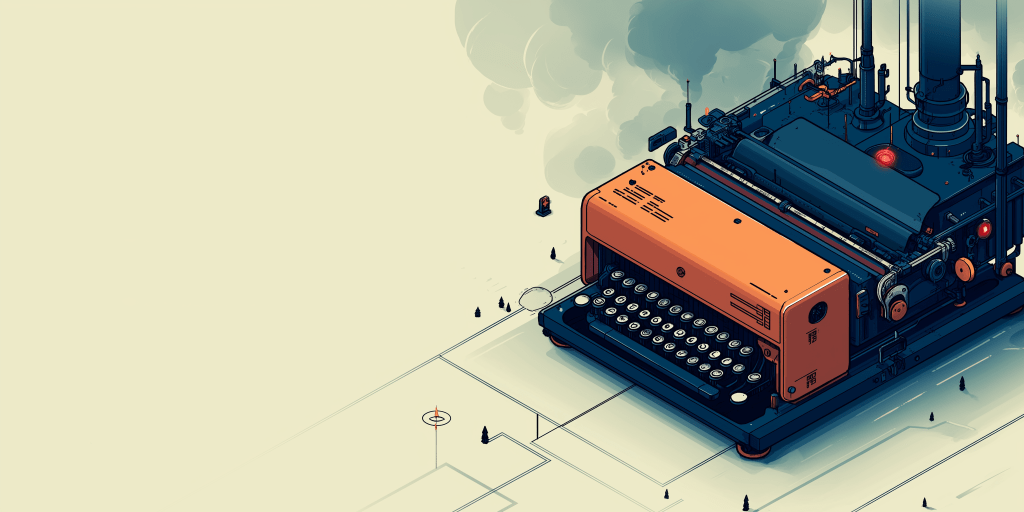 The modern software observability stack is fundamentally flawed because it is missing a crucial “middle layer” of actual understanding and meaning. The current industry approach has simply bolted a highly articulate AI “language layer” on top of a primitive, decades-old “threshold layer,” creating the illusion of intelligence without any genuine comprehension of how the system actually works.
 This post argues that Datadog’s Bits AI and Dash0’s Agent0, despite the obvious polish, primarily automate evidence retrieval, telemetry record navigation, threshold-based insights, and natural-language summarization. They do not demonstrate a genuine “system model” or real-time situational intelligence that participates in regulation as incidents unfold.
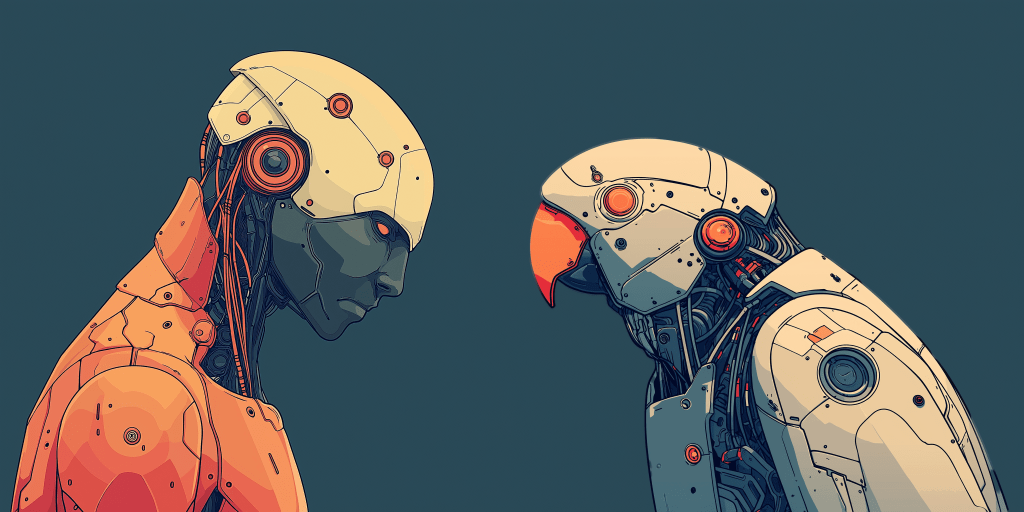 Observability, mainly a data field, kept track of what happened and showed off the system’s outputs. But it didn’t really look at how those systems worked together. Now, the language model is putting together quick stories about what’s happening based on that info. Companies are moving from just figuring out what happened to actually doing something, but they haven’t set up the models they need to really understand the situation.
 There was a time when software strategy could hide inside delivery. A company could say it had a roadmap, and the roadmap would be made of features. Some would be small. Some would be ambitious. Most would take months to design, build, test, integrate, and release. The effort itself created weight. The fact that something was hard to build gave it a kind of strategic seriousness. That world is fading.
 Today’s AI SRE products aren’t autonomous operators or nervous systems. Instead, they’re verbalization layers that overlay telemetry, tickets, runbooks, and dashboards. These products are useful for summarizing known information but are structurally incapable of replacing the system model, engineering judgment, and situational intelligence required for actual operational regulation. Essentially, these products connect language models to existing operational interfaces, generating fluent summaries while leaving the underlying system model untouched.
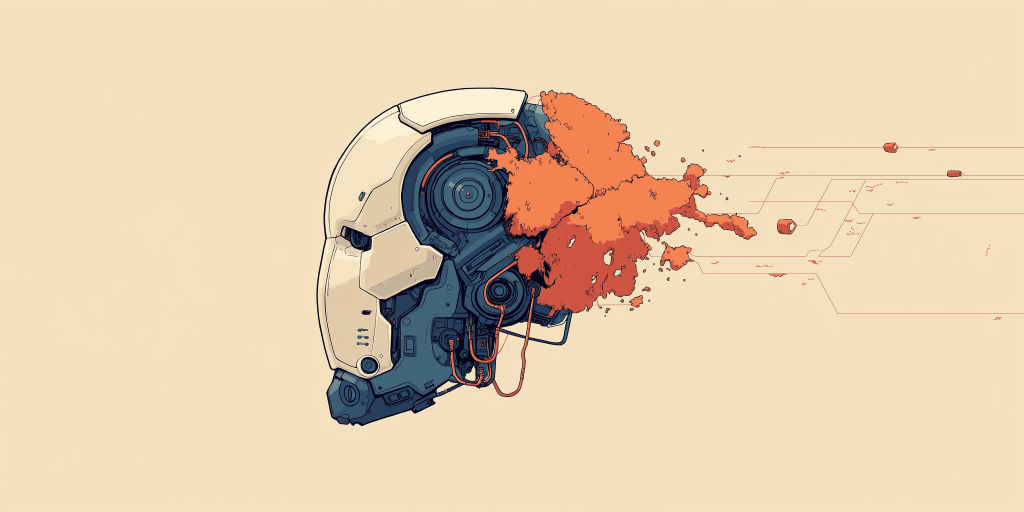 Promising an “AI nervous system” for production infrastructure is fashionable. The pitch is enticing: centralize raw telemetry, let an AI process it, and observe autonomous monitoring and repairs. However, adding an AI to a centralized database doesn’t create a nervous system; it merely automates an external observer’s role. A true nervous system isn’t a remote brain processing and exporting data.
 This technical note emphasizes that true operational resilience hinges on an often-overlooked aspect: the “thinking arrow” within us. This internal process transforms raw actions, such as incidents, memory traces, and data, into valuable knowledge, including models, runbooks, and a deeper comprehension of the system. This crucial step—abduction, model-building, and quick thinking—generates the “interior” (a personal, reconstructible mental model of the system), which is essential for effective steering, particularly in unfamiliar situations.