
The Loop
We usually describe the loop in two arrows.
Doing produces knowing.
Knowing informs doing.
But there is a third arrow between them.
And it carries most of the weight.
Thinking is what turns memory traces into models.
Signals into signs.
It’s what gives an human agent
enough orientation
to decide what to do next.
Doing leaves residue.
Knowing is what settles.
Thinking is the work in between.
Question
If doing and knowing remain intact,
but thinking is displaced,
is the loop still a loop
or has it become a pipeline?
The interior
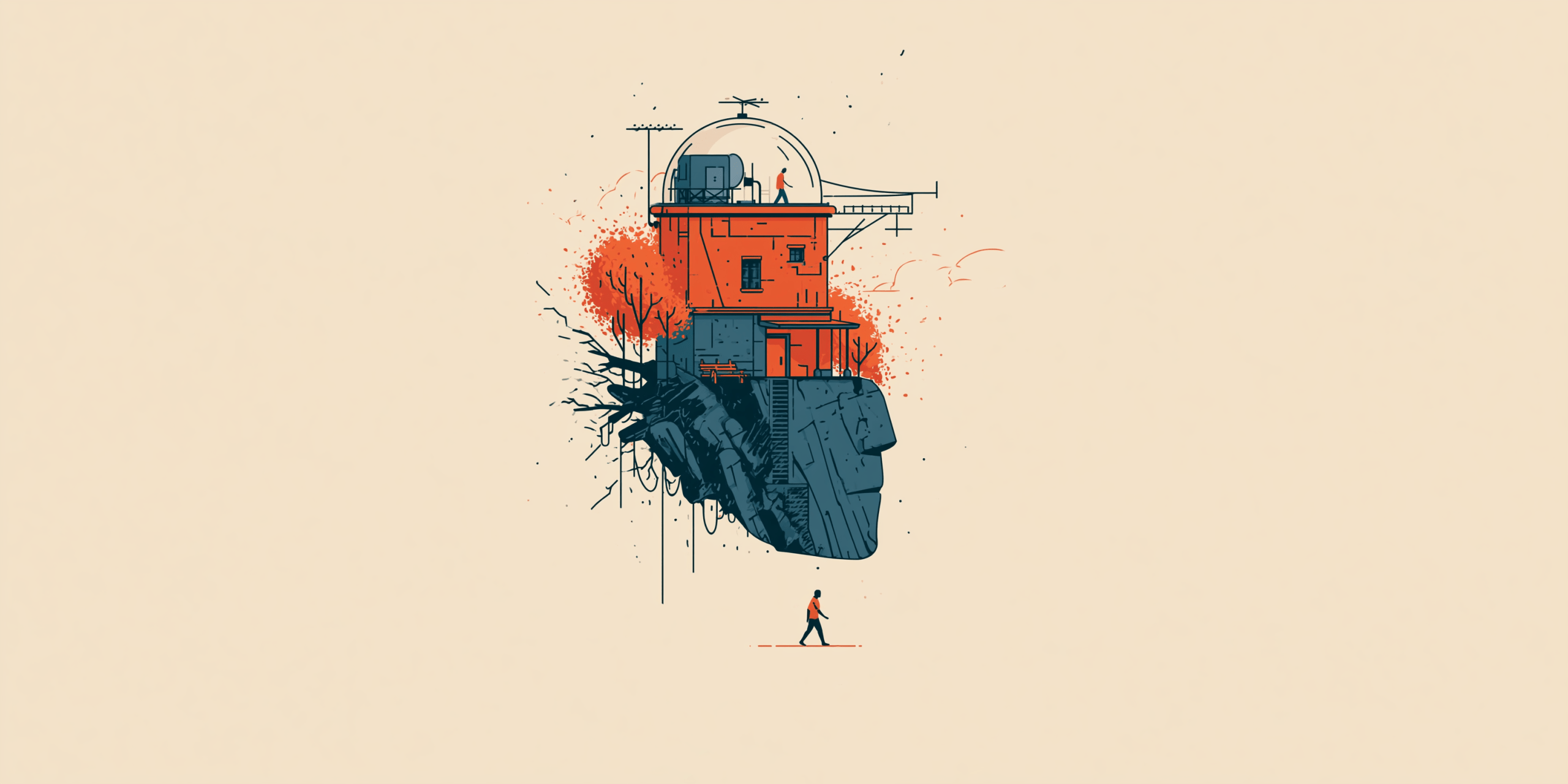
Thinking happens on the inside.
It builds an umwelt—a horizon of relevance—
through which experience becomes evidence.
That interior carries a chain.
From observation to commitment.
If the chain exists, a position can be revisited.
If it can be revisited, it can be regulated.
When the thinking happens elsewhere,
the agent receives conclusions without the chain.
The interior arrives already shaped.
Within the regions that were mapped,
things hold together.
At the edges, they don’t.
That is where the gap appears—
in debugging,
in anomaly recognition,
in anything that pushes beyond what was already known.
Those moments depend on being able to reconstruct
how a conclusion was reached.
That reconstruction only exists
where the thinking was done.
Question
When you accept a conclusion,
can you reconstruct the path that produced it—
or are you trusting that the path exists?
Vibe coding
A new pattern is emerging.
Code is written quickly.
It works often enough.
It feels right.
The agent produces structure.
The human reviews, adjusts, accepts.
The loop appears intact.
Doing still produces something.
Knowing still follows.
But the thinking has shifted.
The interior work is no longer consistently performed
by the human.
Instead, the human receives shaped outputs
and evaluates them.
The role becomes one of selection,
not construction.
At small scales, this works.
The supplied structures are coherent
within the space the agent understands.
The human can recognize fit.
Approve.
Move on.
But something changes at the boundary.
When the system behaves in a way that was not anticipated,
there is no chain to follow back.
No interior reconstruction.
Only the artifact remains.
The code works—until it doesn’t.
And when it doesn’t,
the path that produced it is missing.
Question
When your system fails,
are you debugging a structure
or reconstructing a process that no longer exists?
The verifier
It is tempting to describe the human
as a verifier.
The agent produces.
The human checks.
But verification assumes something is available
to be verified.
A chain.
A reasoning process.
A set of steps that can be inspected.
Without that, verification becomes judgment without grounding.
The human recognizes patterns.
Approves what looks correct.
Rejects what looks off.
This is not verification.
It is pattern matching.
At low complexity, pattern matching is enough.
At higher complexity, it breaks.
Because what must be verified
is not the surface of the artifact,
but the path that led to it.
And that path is absent.
Question
If you cannot inspect the reasoning,
in what sense are you verifying—
and what exactly are you trusting?
The loss
The loss is not correctness.
The system may continue to produce working outputs.
The loss is reconstructability.
Without reconstructability, there is no regulation.
When something goes wrong,
there is no way to trace the failure
through a chain of reasoning.
Only symptoms remain.
The system becomes harder to extend.
Harder to debug.
Harder to trust.
Not because it fails more often,
but because failures cannot be situated.
They cannot be placed
within a structure of cause and consequence.
They appear as events,
not as outcomes of a process.
Question
Are your failures explainable
as outcomes of a process,
or do they appear as isolated events
that resist reconstruction?
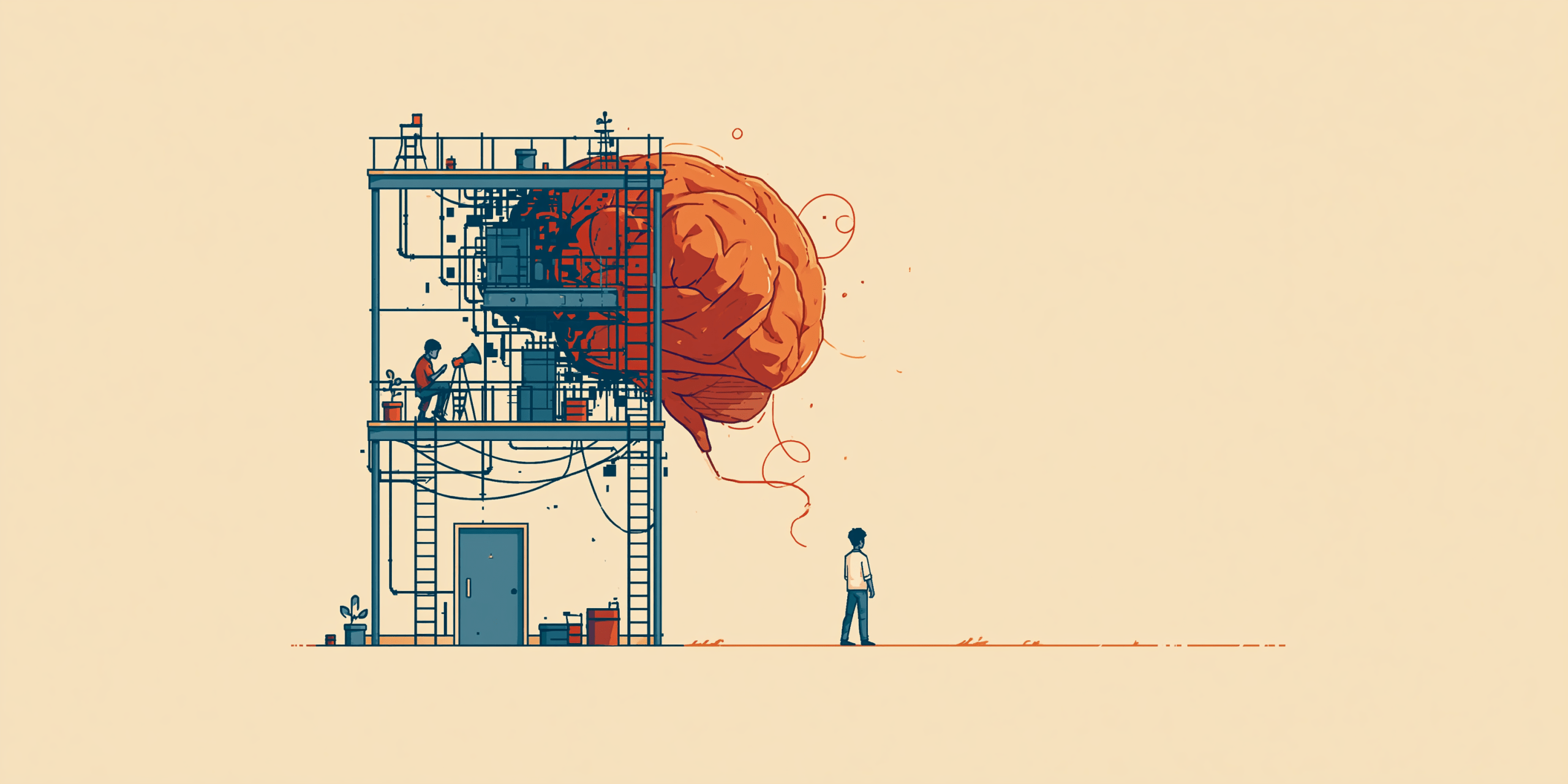
The boundary
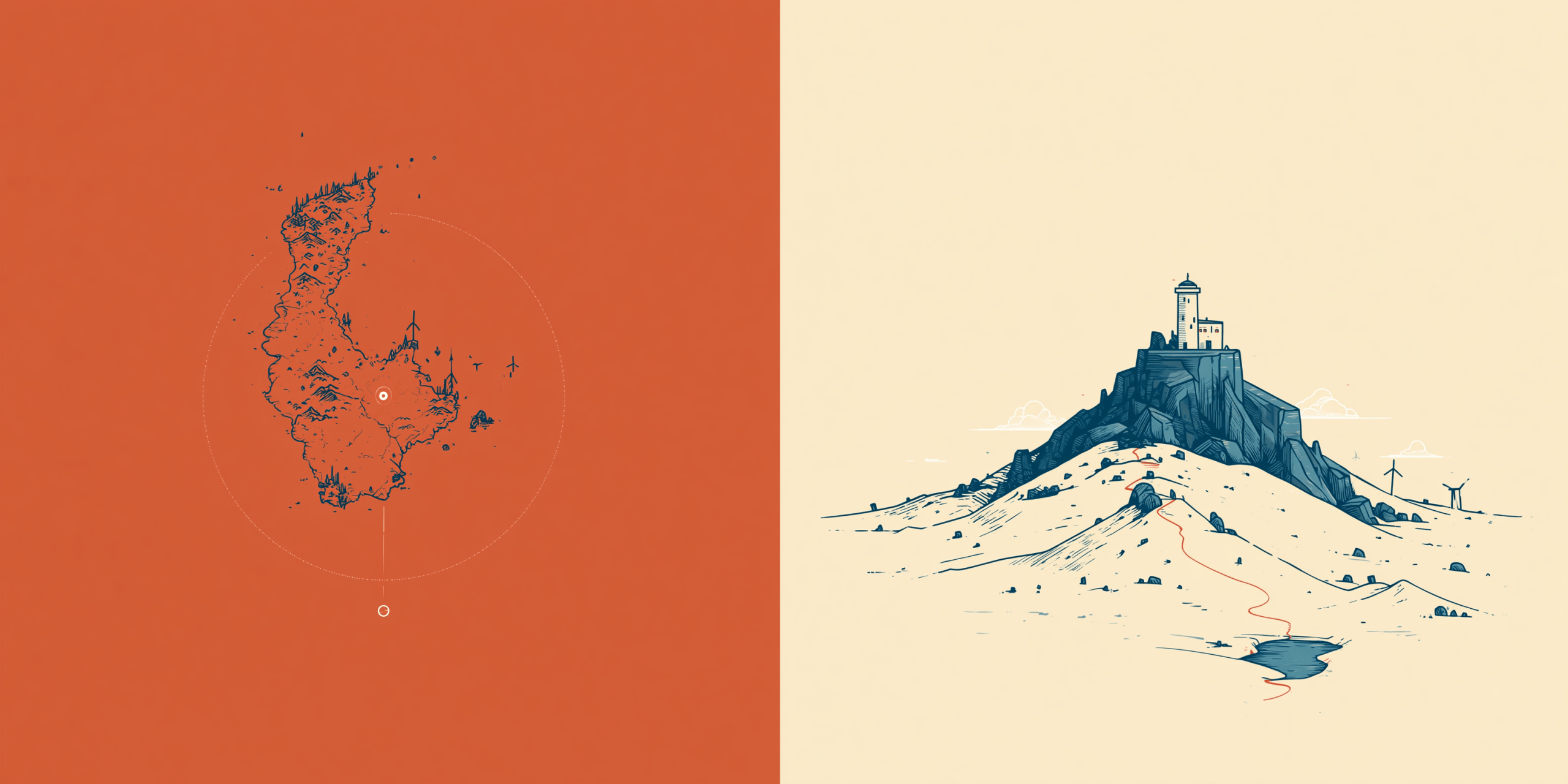
Every system has a boundary.
Inside the boundary,
structures hold.
Outside the boundary,
they don’t.
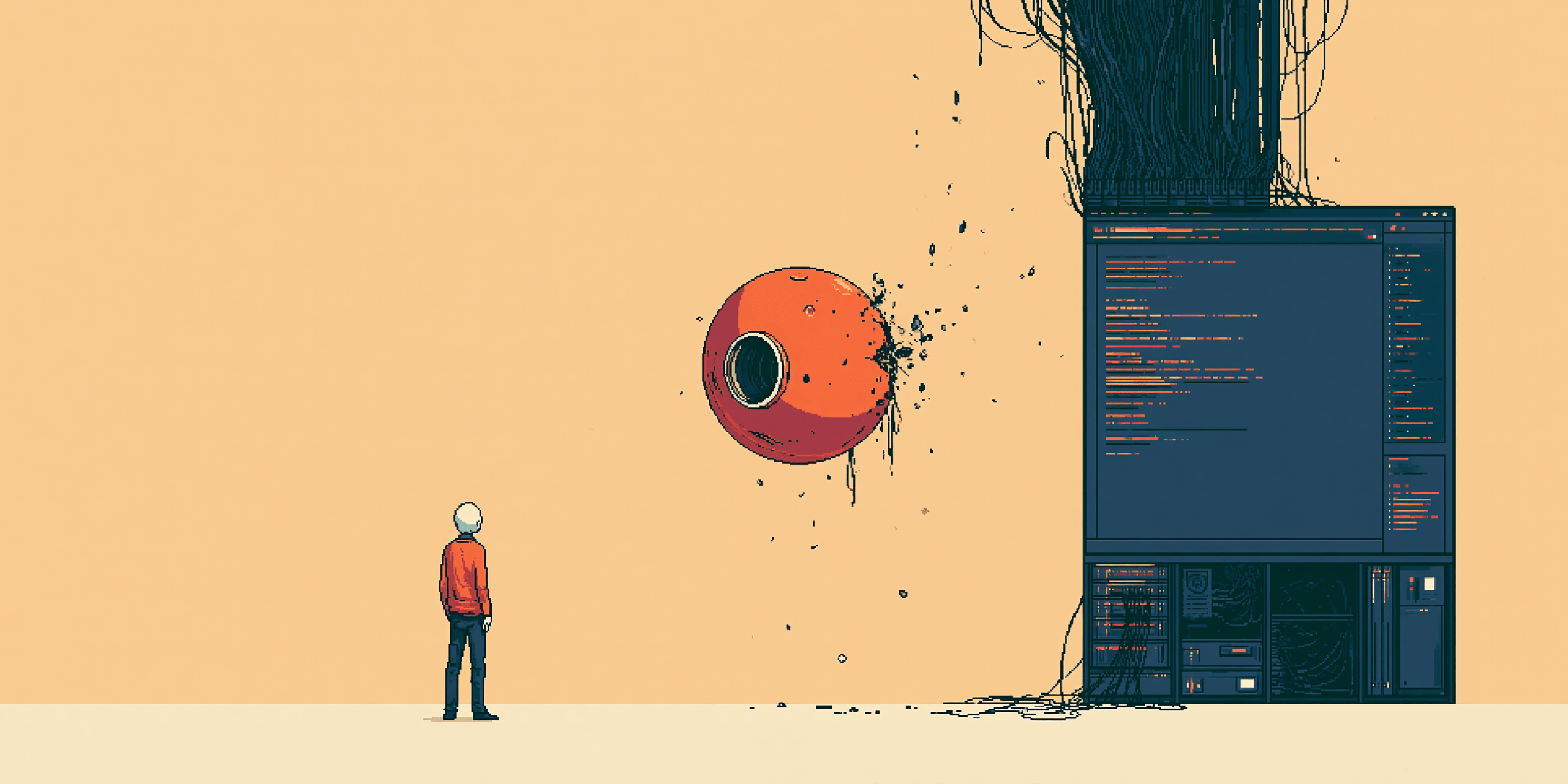
Agent-produced artifacts inherit the boundary
of the agent’s training and context.
Within that boundary,
they are coherent.
Beyond it,
they are undefined.
When the human has not constructed the interior,
they cannot see the boundary clearly.
They experience it only when it is crossed.
As a failure.
As an anomaly.
As something that no longer makes sense.
Question
Do you know where the boundary of your system is—
or do you only discover it
when something breaks?
The shift
The shift is subtle.
It does not remove thinking.
It relocates it.
From the human
to the agent.
From the interior
to an external process.
As long as the system operates
within known regions,
this relocation is efficient.
It accelerates production.
Reduces effort.
Maintains surface coherence.
But it changes the structure of adaptation.
Because adaptation depends on the ability
to reconstruct and revise the chain
from observation to commitment.
When that chain is external,
adaptation depends on access
to the process that produced it.
Without that access,
the system becomes dependent.
It can produce.
It can operate.
But it cannot extend itself
beyond what is already given.
Question
Is your system adapting,
or is it operating within a boundary
it no longer knows how to extend?
The requirement
Adaptive systems require more
than output correctness.
They require reconstructable thinking.
The ability to trace a position
back to its origin.
The ability to revise that path
when conditions change.
This does not require that humans
perform all thinking.
But it does require
that the thinking remains accessible.
Recoverable.
Inspectable.
Extendable.
Without that,
the system accumulates outputs
without accumulating understanding.
Question
Are you accumulating understanding—
or only accumulating results?
The arrow
The third arrow remains.
Doing produces knowing.
Knowing informs doing.
But thinking
is what makes the loop adaptive.
It is the work that binds the two.
When that work is present,
the system can change.
When it is absent,
the system can only repeat.
Question
If the thinking arrow disappears,
what exactly is learning in your system?
Designing for the Thinking Arrow
Systems are now built in the presence of agents
that can produce working structures
faster than humans can fully understand them.
This changes what must be designed for.
The problem is no longer how to produce output.
That constraint is dissolving.
The problem is how to preserve
the ability to think through what has been produced.
Not all thinking must be done by humans.
But the thinking that matters
must remain accessible.
A system that cannot reconstruct its own positions
cannot regulate itself.
A system that cannot regulate itself
cannot adapt under change.
This is not a question of tooling.
It is a question of structure.
Structures that preserve the thinking arrow
share a few properties.
They expose the path from observation to commitment.
They allow positions to be revisited and revised.
They retain enough trace
to make extension possible under novelty.
They do not treat reasoning as an implementation detail
to be optimized away.
They treat it as a first-class concern.
This does not mean slowing down production.
It means distinguishing between
what can be generated
and what must be understood.
Between output
and orientation.
Between correctness
and reconstructability.
The systems that endure
will not be the ones that produce the most.
They will be the ones that can still think
when what they produced
no longer holds.
Question
What would change in your system
if reconstructability
were treated as a requirement
rather than a byproduct?